
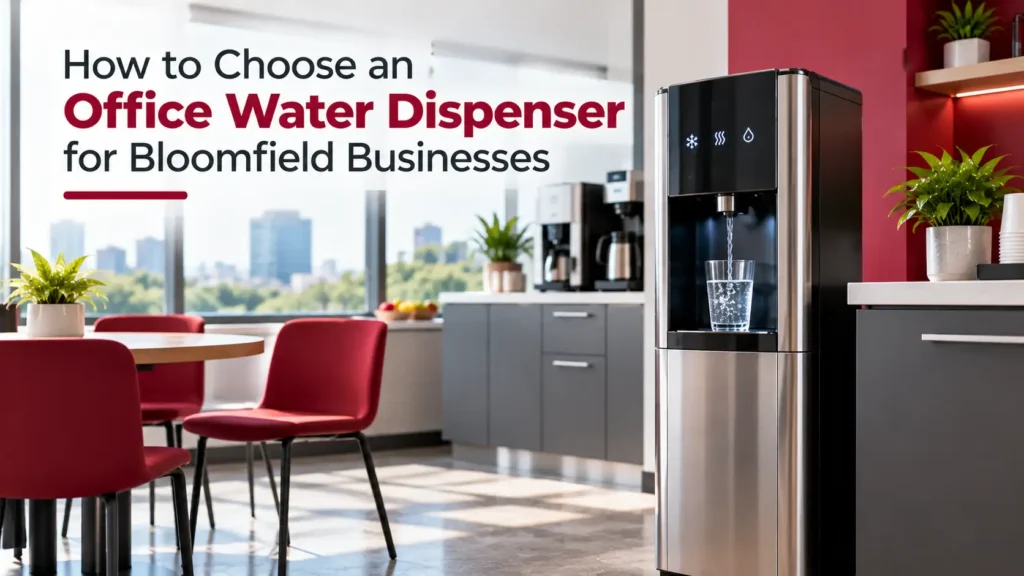
Providing convenient drinking water is a simple way to make a workplace more comfortable and functional. Employees need access to water throughout the day, but choosing the right office water dispenser involves more than selecting a machine that fits in the break room. Businesses need to consider how many people will use it, where it will be installed, how employees prefer to access water, and whether filtration or other features are important.
For Bloomfield businesses, the right solution can depend heavily on the workplace environment. A small professional office may need a compact water station, while a larger facility with many employees may require a higher-capacity setup that can handle frequent use. Understanding the differences between available options can help businesses make a more practical decision.
Why Water Access Matters in the Workplace
Water is one of the most basic workplace refreshments, yet it is easy to overlook when businesses plan their break rooms. Employees may bring bottles from home, purchase drinks during lunch, or rely on whatever water source happens to be available. A dedicated workplace water solution gives employees a convenient option within the building.
Accessible water can also complement essential break room supplies and other workplace refreshment services. Employees visiting the break room for coffee or a snack can easily refill a bottle or get a drink at the same time. This makes water service a natural part of a broader employee refreshment environment rather than an isolated amenity.
For businesses, the decision should focus on convenience, usage, available space, and ongoing service requirements. The best system is one that employees will actually use and that the business can comfortably maintain.
What Is an Office Water Dispenser?
An office water dispenser is a workplace system designed to provide employees with convenient drinking water. Depending on the equipment, it may dispense chilled water, room-temperature water, or other options. Some systems use bottled water, while others connect directly to a building’s water supply and may incorporate filtration.
The term can cover several different equipment formats, so businesses should not assume that every dispenser works in the same way. Capacity, installation requirements, filtration, maintenance, and available features can vary.
Before choosing a system, businesses should identify what they expect from their water service. Is the priority simply having cold drinking water available? Is reducing bottled-water storage important? Does the workplace want filtered water directly from its existing supply? These questions help narrow the options.
How to Compare Office Water Dispenser Options
The right equipment depends on the workplace rather than simply choosing the most feature-heavy option. Businesses should compare several practical factors before making a decision.
1. Employee Usage
Start with the number of employees who are likely to use the dispenser. A system designed for occasional use may not be appropriate for a large workplace where dozens or hundreds of employees refill bottles throughout the day.
Consider:
- Total employee count
- Number of employees using the break room
- Peak break periods
- Number of shifts
- Expected daily water consumption
- Whether visitors also use the facility
Usage patterns are especially important in larger workplaces. If employees tend to take breaks at similar times, demand may increase significantly during certain periods.
2. Available Space
The physical footprint of the equipment matters. A dispenser may need to fit near a coffee station, refrigerator, counter, seating area, or an office ice machine where one is part of the break room setup.
Measure the available area before selecting equipment and consider how employees will approach and leave the dispenser. The machine should not create a bottleneck in a busy break room.
A compact solution may work better for a small office, while a larger employee facility may have enough room for a more substantial setup.
3. Water Source
Another major consideration is where the water comes from. Some dispensers rely on bottled water, while others can connect directly to a building’s water supply.
A plumbed system can change the installation requirements because the location needs an appropriate water connection and drainage arrangement where required. Businesses should understand these requirements before selecting a location.
The building itself may therefore influence which type of water dispenser for office environments is practical.
Office Water Cooler vs. Water Dispenser
The terms “water cooler” and “water dispenser” are often used interchangeably, but businesses should focus on the actual equipment features rather than the label. An office water cooler traditionally refers to equipment that provides chilled drinking water and may use a replaceable bottle. Some modern workplace systems use a direct water connection and filtration instead.
When comparing equipment, ask what the system actually provides:
- Cold water
- Room-temperature water
- Filtered water
- Bottle-based water
- Direct-connect water
- Different dispensing options
The terminology used by a provider may vary, so understanding the underlying equipment and service arrangement is more useful than relying on the product name alone.
Office Water Filtration: What Should Businesses Consider?
Office water filtration can be an important consideration for businesses that want filtered drinking water without relying entirely on bottled water. Filtration systems can be incorporated into certain direct-connect workplace water solutions. The specific filtration method, replacement schedule, and maintenance requirements depend on the equipment being considered.
Businesses should ask:
What Does the Filter Address?
Not all filters are designed to address the same water characteristics. A business should understand what the proposed filtration system is designed to reduce or remove.
How Often Does the Filter Need to Be Replaced?
Filters are consumable components. The business should understand how replacement is handled and whether service is included in the refreshment program.
Who Handles Maintenance?
A workplace water system should not become another piece of equipment that office staff have to manage without support. Ask what routine service is included and who is responsible for keeping the system operating properly.
Does the Building Need Any Installation Work?
Direct-connect systems can have installation requirements that depend on the building and placement. These should be reviewed before installation begins.
Choosing the Right Location for a Water Dispenser
Where a dispenser is installed can be just as important as which model is selected. Employees should be able to reach it without crossing through a busy work area or creating congestion.
A break room is an obvious location because employees are already visiting the space for food and beverages. However, larger workplaces may have other areas where water access makes sense.
Potential locations can include:
- Employee break rooms
- Staff kitchens
- Common areas
- Production support areas
- Office kitchenettes
- Employee lounges
- High-traffic shared spaces
The location should also have the infrastructure needed for the selected equipment. Businesses should consider electrical access, water connections, surrounding counter space, and enough clearance for employees to use the dispenser comfortably.
What Size Office Water Dispenser Does Your Business Need?
There is no universal dispenser size that works for every office. Capacity should be considered alongside employee count and usage patterns. A small workplace with a limited number of employees may not need the same equipment as a large corporate facility. Similarly, a workplace with multiple shifts can experience much higher daily usage than a similarly sized business operating only during standard office hours.
Rather than choosing based solely on employee headcount, consider when and how employees use the refreshment area.
For example, a facility with 100 employees who work across multiple shifts may have a different water demand pattern from a 100-person office where everyone works from 9 to 5. This is why businesses should discuss expected usage when evaluating an office water dispenser.
Bottled vs. Direct-Connect Water Systems
One of the most important decisions is whether to use bottled water or a direct-connect system; comparing bottleless and bottled water coolers can help clarify the practical differences.
Bottled Water
Bottled systems can be familiar and straightforward, but businesses need to consider bottle storage, replacement, handling, and the physical space required for inventory.
Direct-Connect Systems
A direct-connect system uses the building’s water supply and may incorporate filtration. This can eliminate the need to store large water bottles, but installation and maintenance requirements need to be considered.
Neither option is automatically right for every workplace. Businesses should evaluate the building, employee usage, available space, and desired maintenance arrangement before choosing.
How a Water Dispenser Fits Into a Complete Break Room
Water does not have to be the only refreshment service in a workplace. In many offices, it works best when combined with other employee amenities.
For example, employees may use a coffee station in the morning, grab a snack from vending during an afternoon break, and refill their water bottle throughout the day.
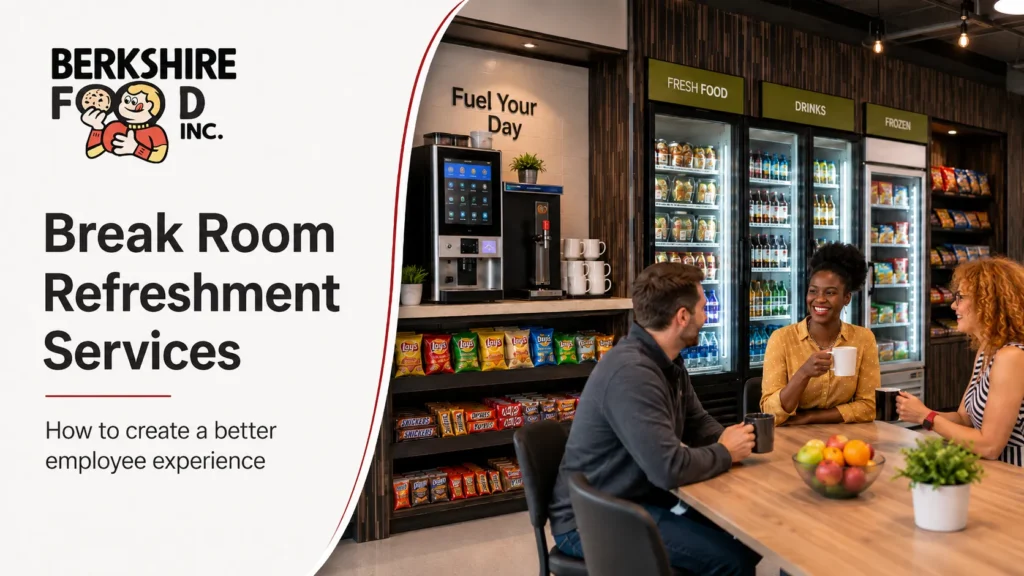
A broader workplace refreshment strategy can therefore make the break room more useful. Our Break Room Refreshment Services guide provides an overview of the different ways businesses can approach workplace food and beverage needs.
The key is to select complementary services rather than filling the space with equipment that employees do not need.
Questions to Ask Before Choosing a Water Dispenser for Office Use
Before selecting equipment, office managers and facility teams should ask the provider several practical questions.
Is Installation Included?
Understand whether installation is part of the proposed service and what the business needs to provide at the installation location.
Is Maintenance Included?
Clarify who handles routine service, repairs, and filter changes where applicable.
What Water Options Are Available?
Ask whether the system provides chilled, room-temperature, or filtered water and which options are available for the specific equipment.
What Space Is Required?
The equipment should fit comfortably without disrupting traffic flow or existing break room equipment.
How Is the System Serviced?
Understand how the business requests service and how frequently routine maintenance is performed.
Can the Solution Scale?
If employee numbers increase or the workplace expands, ask whether the water solution can be adjusted or supplemented.
These questions can prevent businesses from choosing a system based only on appearance or initial convenience.
Signs Your Workplace Needs Better Water Access
Businesses may already have a water source but still have a workplace hydration problem. Several signs can indicate that the current setup is not meeting employee needs.
Employees may regularly:
- Carry bottled water into the workplace
- Leave the building to purchase drinks
- Complain about the existing water setup
- Avoid using an inconvenient water station
- Crowd around one small dispenser
- Run out of bottled water
- Store excessive quantities of bottled water
- Ask for a more convenient way to refill bottles
These issues can point to a need for better placement, greater capacity, filtration, or a more suitable equipment format.
The solution does not necessarily require a complete break room redesign. Sometimes a better water system or a more convenient location can address the biggest problem.
How to Choose an Office Water Dispenser for a Bloomfield Workplace
Choosing an office water dispenser starts with understanding how your workplace uses its break room. Consider how many employees will rely on the water station, when usage is likely to be highest, where employees currently get drinking water, and how much room is available for new equipment. These details can help you narrow down the type and size of solution that makes sense for your business.
It is also worth looking at the rest of your workplace refreshment setup before making a decision. Businesses exploring workplace refreshment options in Bloomfield can consider how water service would work alongside coffee, vending, snacks, meals, or other break room amenities.
Next, decide whether bottled or direct-connect water better fits your facility. If reducing bottle storage is important, a direct-connect system may be worth considering. If filtration is a priority, look at the available filtration options and understand what maintenance the system requires.
Finally, think about convenience. The dispenser should be easy for employees to reach without creating traffic around the break room. A well-positioned water station can become a useful part of the daily workplace routine rather than another piece of equipment that employees overlook.
Keeping Your Workplace Water Solution Useful Over Time
Selecting equipment is only the beginning. A workplace water solution should remain convenient and reliable after installation.
Businesses should establish a simple process for reporting problems and understand which maintenance tasks are handled by the service provider. If the system uses replaceable filters or other consumable components, those requirements should also be tracked.
Employee feedback can provide useful information after the system has been in place. Ask whether employees find the location convenient, whether demand is being handled effectively, and whether additional access is needed elsewhere.
If the workplace changes, the refreshment setup should be reviewed as well. New employees, additional shifts, office renovations, or changes in break room usage can all affect whether the existing water solution remains appropriate.
Frequently Asked Questions
The best option depends on employee usage, available space, building infrastructure, and the type of water service the business wants. Companies should compare capacity, water source, filtration, installation, maintenance, and ongoing service before choosing equipment.
The terms are often used interchangeably. Traditionally, a water cooler may refer to bottled equipment that provides chilled water, while modern dispensers can include direct-connect systems with filtration and multiple dispensing options. Businesses should compare the actual equipment features rather than relying on terminology.
Both can be suitable depending on the workplace. Bottled systems may be practical in locations without the infrastructure for direct connection, while filtered direct-connect systems can provide an alternative to storing and replacing large water bottles. The building and workplace requirements should guide the decision.
Businesses should understand what the filtration system is designed to address, how often filters need replacement, who handles maintenance, and whether installation requirements apply. The specific equipment and water conditions should be reviewed before selecting a system.
There is no fixed number. Employee count, floor layout, workplace size, shift schedules, and dispenser capacity all affect the appropriate setup. A larger facility may benefit from multiple convenient water points rather than requiring everyone to use one dispenser.
A break room, staff kitchen, employee lounge, or other shared area can work well when the location is accessible and has the necessary infrastructure. Businesses should also consider employee traffic patterns so the dispenser does not create congestion.
Maintenance requirements vary by equipment type. Some systems may require regular cleaning, filter replacement, or other service. Businesses should ask the provider about the recommended service schedule and what maintenance is included with the workplace water program.
Yes. Water can complement coffee, vending, pantry, micro market, and other workplace refreshment options. Combining services can give employees more convenient access to drinks and food while allowing the business to build a break room around its specific needs.