
A well-equipped workplace break room gives employees a convenient place to grab a drink, prepare coffee, enjoy a snack, or take a proper pause during the workday. For Berlin businesses, choosing the right break room supplies means looking beyond a coffee maker or a few cabinets. The most useful setup combines everyday kitchen basics with the food, beverages, storage, and refreshment options employees actually use.
Berkshire Food helps businesses throughout Connecticut create practical workplace refreshment environments that fit different teams, schedules, and spaces. If you are reviewing your current setup, you can also explore our workplace refreshment services for Berlin, CT to see how broader refreshment solutions can complement your break room.
What Counts as Break Room Supplies?
Break room supplies include the everyday items employees need to use a shared workplace kitchen or refreshment area comfortably. Some are permanent fixtures or equipment, while others need to be replenished regularly. Thinking about the break room as a complete employee space makes it easier to identify what is missing and avoid spending money on items that receive little use.
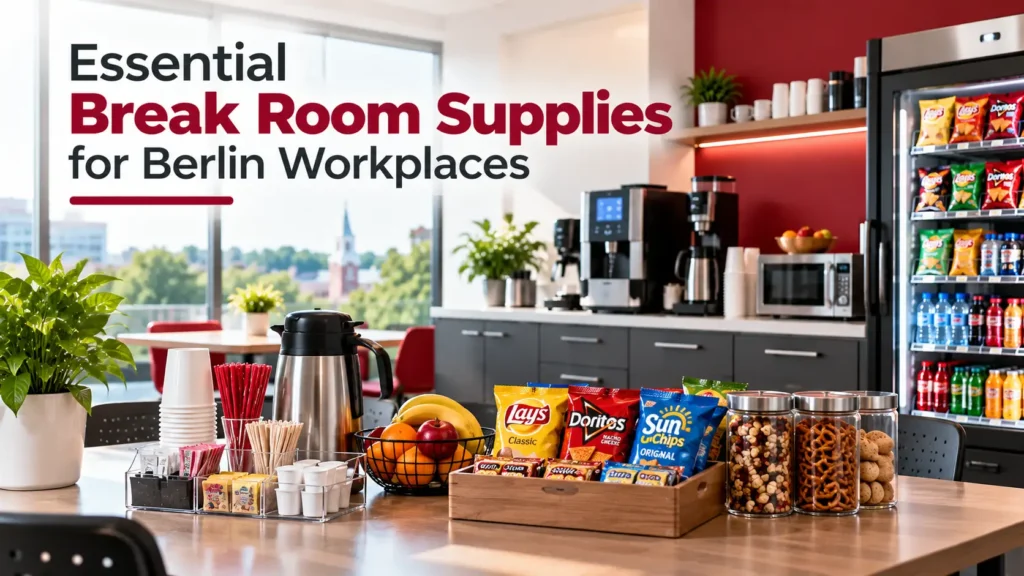
For many workplaces, the basics include cups, plates, utensils, napkins, coffee supplies, drinkware, food-storage items, cleaning products, and simple serving equipment. Depending on the size and purpose of the space, businesses may also need refrigerators, microwaves, coffee equipment, vending machines, water solutions, pantry storage, or refrigerated food options.
The goal is not to fill every cabinet. Instead, businesses should build a practical collection of break room essentials that supports the way employees actually use the space.
Why the Right Supplies Matter in a Workplace
Employees may spend only a few minutes at a time in the break room, but those short visits happen repeatedly throughout the week. If basic supplies are missing, employees notice quickly. An empty coffee station, no clean cups, or a lack of simple utensils can turn an otherwise useful space into a source of frustration.
A thoughtfully supplied break room can also make workplace refreshments easier to manage. Employees know where to find what they need, while office managers can establish a clearer routine for checking inventory and replenishing frequently used items. This is particularly helpful in workplaces where several departments or shifts share one kitchen.
The right supplies can support a more welcoming environment without requiring an elaborate renovation. Even relatively simple improvements can make the break room feel more functional, organized, and prepared for everyday use.
Essential Office Kitchen Supplies Every Workplace Should Consider
The exact list will vary by workplace, but most office kitchens need a dependable foundation of basic supplies. Start with the items employees use repeatedly rather than buying large quantities of specialty products that may sit untouched.
Everyday Dining Supplies
A workplace kitchen should generally have enough basic dining items for normal daily use. Depending on whether employees bring meals from home or purchase food onsite, this may include:
- Disposable or reusable cups
- Plates and bowls
- Forks, knives, and spoons
- Napkins and paper towels
- Stirring sticks
- Food-storage containers
- Disposable food containers
- Reusable water bottles or cups
- Serving utensils
The quantity should reflect actual usage. A small office may only need a modest supply, while a larger workplace with multiple shifts can require significantly more inventory.
Coffee and Beverage Supplies
Coffee is often one of the most frequently used parts of a workplace break room. Basic coffee-related supplies can include filters, stirrers, sweeteners, creamers, cups, lids, and cleaning supplies for the equipment.
Businesses should also consider how employees access other beverages. Bottled or canned drinks, water, and a dedicated office tea service can complement a coffee station and give employees more choice throughout the day.
If coffee is a significant part of the break room, it may make sense to evaluate whether a professionally managed coffee program would be more practical than asking office staff to purchase and maintain everything independently.
Cleaning and Sanitation Supplies
Cleanliness is just as important as food and beverage availability. Employees need access to basic supplies for cleaning small spills and wiping surfaces, while clear office kitchen etiquette helps everyone keep shared areas orderly.
Useful items can include:
- Disinfecting wipes
- Surface cleaner
- Dish soap
- Sponges or scrubbers
- Trash bags
- Paper towels
- Hand soap
- Disposable cleaning gloves
These items should be easy to find and regularly checked. A cleaning supply that is technically available but stored in an inaccessible location does not provide much practical value.
Building a Better Break Room Supply Checklist
Before purchasing new supplies, create a simple inventory of what employees already use. This prevents the common mistake of buying items based on assumptions rather than actual demand.
A useful checklist can be organized into several categories:
Food and Dining
Plates, bowls, utensils, napkins, containers, and serving items.
Beverages
Coffee, tea, water, cups, creamers, sweeteners, and other drink options.
Equipment
Microwave, refrigerator, coffee brewer, water equipment, vending equipment, or other appliances appropriate for the space.
Cleaning
Paper towels, wipes, dish soap, trash bags, and other cleaning basics.
Storage
Cabinets, shelves, containers, refrigerator space, and clearly labeled areas for shared supplies.
Employee Convenience
Items such as bottle openers, food labels, reusable containers, or other practical accessories based on workplace needs.
This type of checklist gives office managers a simple way to identify gaps. It also creates a better starting point when discussing a larger refreshment program with a provider.
How to Choose Break Room Supplies for Different Workplaces
There is no universal break room supply list that works for every business. Employee headcount, workplace type, shift schedules, available space, and refreshment habits can all change what a business needs.
Small Professional Offices
A smaller office may not need extensive food-service equipment. Employees may primarily use the space for coffee, quick snacks, and reheating meals brought from home.
For this type of workplace, prioritize:
- Coffee supplies
- Cups and utensils
- Microwave
- Refrigerator
- Water access
- Basic cleaning supplies
- Small pantry inventory
The focus should be on convenience without taking up unnecessary space.
Larger Corporate Offices
A larger office may have several teams using the same break room throughout the day. This increases demand for beverages, snacks, dining supplies, and cleaning products.
Businesses may benefit from a more structured refreshment program that combines standard office kitchen supplies with professionally managed food and beverage services. Storage and replenishment become particularly important because supplies can disappear quickly when many employees share the same space.
Manufacturing and Industrial Workplaces
Manufacturing environments often have employees working scheduled shifts, which can create concentrated demand during designated break periods. In these settings, the break room may need to accommodate more employees at the same time.
Businesses should consider durable equipment, convenient food and beverage access, adequate refrigerator capacity, water availability, and supplies that can be replenished consistently.
Healthcare and Institutional Workplaces
Healthcare and institutional environments can have employees working around the clock or across multiple schedules. A refreshment area may therefore need to remain useful throughout extended operating hours.
Businesses should think about accessibility, cleanliness, storage, beverage availability, and options that work for employees taking short breaks at different times.
Stocking Breakroom Supplies Without Creating Waste
One of the biggest challenges with workplace kitchens is finding the right inventory level. Too little stock creates shortages, while too much can create clutter, unnecessary expense, and products that remain unused.
Start by tracking what employees actually consume for several weeks. Pay attention to which products disappear quickly and which remain untouched. You may find that coffee supplies need frequent replenishment while certain specialty snacks rarely move.
It is also useful to establish minimum inventory levels for essential items. For example, an office manager could decide that cups, coffee, paper towels, and cleaning supplies should never fall below a specific quantity.
Regular inventory checks can then focus on those high-priority items rather than requiring someone to count every product in the break room.
Should Businesses Provide Snacks and Drinks?
Whether a company should provide refreshments depends on its workplace culture, budget, and employee expectations. Some businesses provide a basic selection of coffee and pantry items, while others allow employees to purchase snacks and drinks through vending or self-service options.
There is no need to treat these approaches as mutually exclusive. A business could provide coffee, water, and selected pantry snacks while offering additional products for purchase.
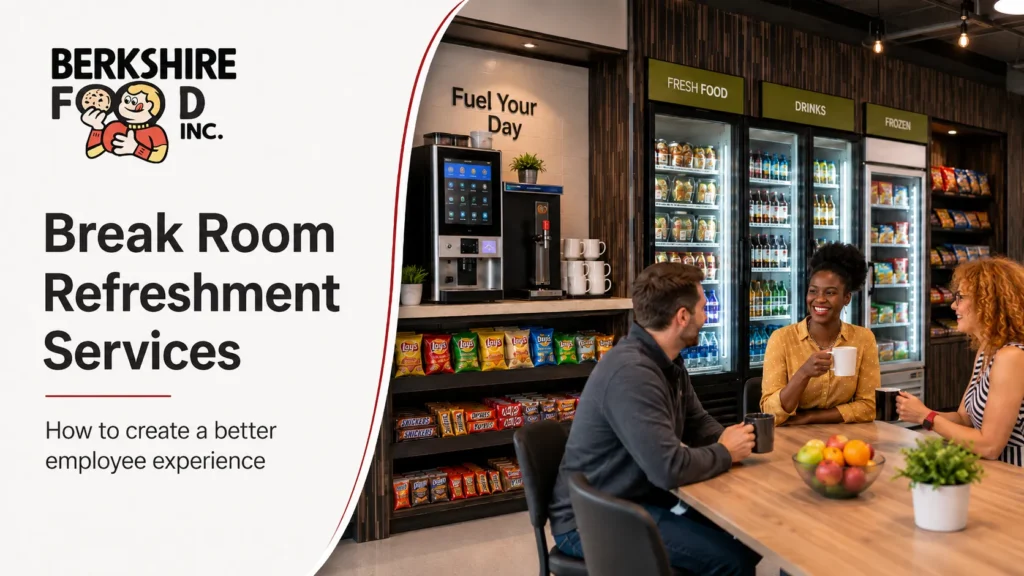
For businesses considering a broader refreshment strategy, Berkshire Food’s Break Room Refreshment Services guide can help frame the different ways a workplace can approach food, beverages, and employee refreshment needs.
The important consideration is transparency. Employees should understand which items are provided by the employer and which require individual payment.
Combining Supplies With Managed Refreshment Services
Basic supplies are only one part of an effective break room. Businesses may also need a reliable way to provide coffee, water, snacks, meals, and beverages without putting the entire responsibility on an office manager.
Managed refreshment services can reduce some of that administrative work by bringing professional support into the workplace. Depending on the location and employee needs, a business might combine a coffee program with vending, pantry service, water service, a micro market, or a Smart Cooler.
This approach can be particularly useful when the workplace has grown beyond a simple kitchen setup. Instead of asking an employee to repeatedly shop for supplies, businesses can explore a refreshment program designed around expected usage and available space.
The best setup will depend on the workplace. A small office may need only a few services, while a larger facility may benefit from several complementary options.
How Often Should Break Room Supplies Be Replenished?
There is no single replenishment schedule that works for every business. Usage depends on employee count, working hours, workplace culture, and the type of refreshments being provided.
High-use items such as coffee, cups, water, napkins, and paper towels may need to be checked several times per week. Other items may only require occasional restocking.
Businesses with multiple shifts should also consider when inventory checks take place. If supplies are replenished only during a daytime administrative schedule, an evening or overnight team may encounter empty shelves.
A simple replenishment routine can help:
- Check high-use supplies regularly.
- Track products that run out unexpectedly.
- Review consumption by department or shift when possible.
- Remove damaged or expired items.
- Keep frequently used products easy to access.
- Adjust purchasing based on actual consumption.
The objective is consistency rather than excessive inventory.
Making the Most of Limited Break Room Space
Not every Berlin workplace has a large kitchen or dedicated cafeteria. Smaller spaces can still provide useful refreshment options if the layout is planned carefully.
Vertical storage can help keep counters clear, while cabinets can organize less frequently used supplies. Frequently used items should remain within easy reach. Coffee equipment, water access, and food storage should be positioned so employees can use them without creating unnecessary congestion.
Businesses should also think about traffic flow. If several employees typically arrive during the same break period, equipment placement can make a noticeable difference. The placement of a break room refrigerator, microwave, coffee station, or vending machine should allow employees to use the equipment without blocking the main path through the room.
When space is limited, choosing the right format becomes especially important. A compact Smart Cooler, vending machine, or focused pantry setup may provide useful food and beverage access without requiring a large dedicated area.
Signs Your Current Break Room Needs an Upgrade
Sometimes the need for better supplies is obvious. Other times, employees simply work around problems until someone takes a closer look.
Common signs include:
- Coffee supplies regularly run out
- Employees bring their own drinks because workplace options are limited
- Countertops become cluttered with shared supplies
- Employees cannot find basic utensils or cups
- Food-storage space is consistently full
- Cleaning supplies are difficult to locate
- Employees leave the workplace to buy snacks or drinks
- One person spends too much time managing the kitchen
- Different shifts receive noticeably different refreshment access
These signs do not necessarily mean the business needs a complete renovation. Sometimes reorganizing supplies is enough. In other cases, adding a managed refreshment service may solve a larger operational problem.
Creating a Break Room Employees Will Actually Use
A workplace break room should be designed around employee behavior rather than an idealized checklist. If employees rarely use certain products, adding more of them will not improve the experience. Likewise, a beautiful kitchen can still be inconvenient if coffee, water, snacks, and basic supplies are difficult to access.
Start by asking what employees use most often. Gather feedback about missing products, preferred beverages, meal habits, and the times when the space becomes busiest.
Then look at the physical environment. Is there enough storage? Can several people use the space at once? Is the refrigerator large enough? Are trash and cleaning supplies easy to access? Does the coffee area create a bottleneck?
Once these questions are answered, businesses can prioritize the break room supplies and services that will make the biggest difference.
A Practical Break Room Setup for Berlin Businesses
For a Berlin workplace starting from scratch, the best approach is usually to build the refreshment area in stages rather than purchasing everything at once.
Begin with the fundamentals:
- Clean and organized food-storage areas
- Basic dining supplies
- Coffee and beverage supplies
- Reliable water access
- Microwave and refrigerator where appropriate
- Cleaning and sanitation products
- Clearly designated trash and recycling areas
Then evaluate whether employees need more convenient access to snacks, meals, or beverages. If they do, a vending machine, pantry program, micro market, or Smart Cooler may be worth considering.
Finally, review the setup after it has been in use for several weeks. Employee habits will reveal which products are valuable, where congestion occurs, and what needs to change.
Frequently Asked Questions
The most important supplies are the items employees use consistently, including cups, plates, utensils, napkins, coffee supplies, water, cleaning products, paper towels, and food-storage items. The exact list should reflect employee count, workplace schedules, available equipment, and whether the business provides snacks and drinks or employees purchase them.
There is no standard budget that applies to every workplace. Costs depend on employee count, the products provided, equipment requirements, and how much of the refreshment program the employer covers. Businesses should first identify high-use essentials and then determine which additional services or products provide meaningful value for employees.
Office kitchen supplies can include cups, plates, utensils, napkins, coffee filters, creamers, sweeteners, stirrers, paper towels, cleaning products, food-storage containers, and serving items. Equipment such as a refrigerator, microwave, coffee brewer, or water solution may also be appropriate depending on the size and purpose of the workplace kitchen.
High-use supplies may need to be checked several times a week, while less frequently used products can be reviewed less often. The best schedule depends on employee headcount and consumption. Tracking which items regularly run out is a simple way to establish a more accurate replenishment routine.
Some employers provide snacks and beverages as an employee benefit, while others allow employees to purchase refreshments. A combination can also work well. For example, a company might provide coffee and selected pantry items while using vending or another self-service option for additional snacks and drinks.
Prioritize frequently used supplies, use vertical or cabinet storage, and keep counters clear. Compact refreshment options can also help when floor space is limited. Businesses should consider employee traffic patterns before placing appliances or equipment so the room remains easy to use when several people take breaks at the same time.
A managed service may be worth considering when an office manager is spending significant time purchasing supplies, when employees regularly encounter empty shelves, or when the workplace wants more food and beverage variety. Businesses can evaluate coffee, vending, pantry, water, micro market, and Smart Cooler options based on their specific needs.
Start by reviewing what employees use, what frequently runs out, and which parts of the space create inconvenience. Then organize the essential supplies, improve storage, and consider whether professional refreshment services could fill remaining gaps. A workplace can improve its break room gradually rather than replacing every element at once.