
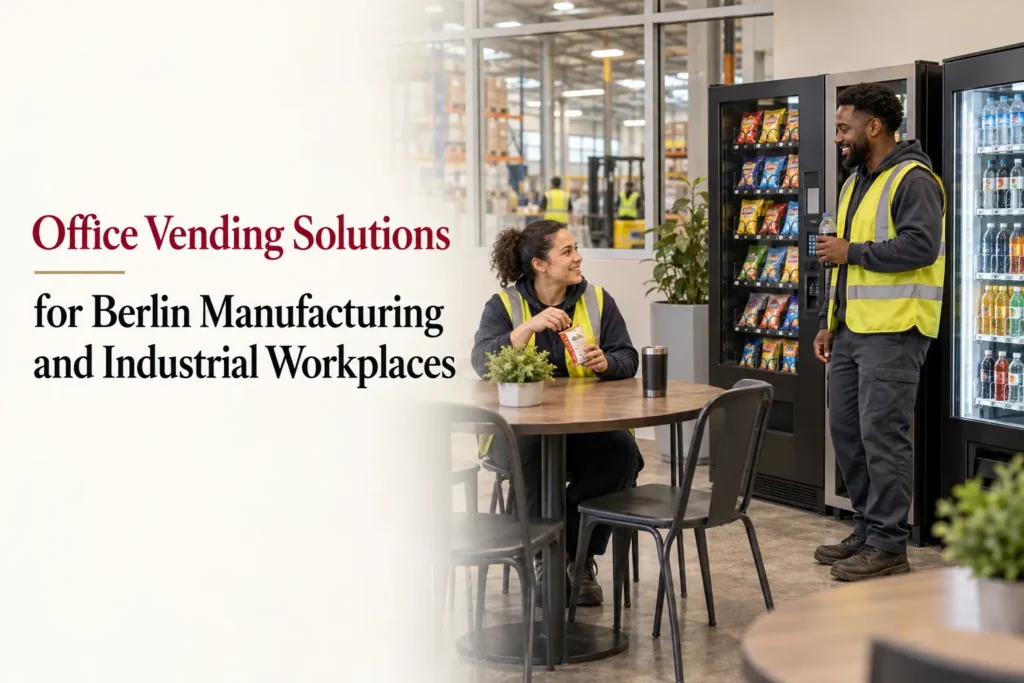
Manufacturing plants, warehouses, distribution centers, and other industrial workplaces operate differently from traditional offices. Employees may work early mornings, evenings, overnight schedules, or rotating shifts. Breaks are often scheduled carefully, and leaving the facility for a snack or cold drink may be impractical. These conditions make dependable on-site refreshment access especially useful.
Industrial vending solutions give employees convenient access to snacks and beverages while they are at work. A successful program requires more than installing a machine in an available corner. Equipment capacity, placement, product selection, shift schedules, payment convenience, and restocking all need to reflect the way the facility operates.
Companies exploring workplace refreshment services in Berlin, CT can use managed vending to make break periods more convenient while reducing the amount of purchasing and inventory work handled internally.
Why Industrial Workplaces Have Different Vending Needs
A conventional office may experience its heaviest break room traffic around lunch. A manufacturing or warehouse facility can have several demand periods as teams start, finish, or change shifts. Employees may also have limited time to reach a break area, make a purchase, and return to their workstations.
The physical nature of many industrial roles can influence product demand. Cold drinks, water, filling snacks, familiar treats, and quick options may sell at different rates than they would in a professional office. A generic product plan may therefore leave popular selections empty while other items remain unsold.
Reliable manufacturing vending services should account for these operating conditions when selecting equipment. The number of employees is important, but shift distribution, break timing, facility layout, and access to nearby food options can be just as influential.
Keep Refreshments Available Across Multiple Shifts
One of the main advantages of vending is that products can remain accessible whenever employees are permitted to use the break area. This can support early, late, and overnight teams that may have fewer nearby food and beverage options available during their shifts.
Effective shift worker vending solutions should provide useful options for every shift. If the most popular products are regularly gone before the evening or overnight shift begins, those employees may have fewer choices than earlier shifts.
Plan Around Shift Changes and Break Schedules
Employers should share accurate schedules with the vending provider, including shift start times, scheduled breaks, seasonal staffing changes, and periods of unusually high activity. This information helps determine when machines are likely to experience the greatest demand.
Facilities with several shifts may need higher-capacity equipment or more frequent service than a workplace with the same number of employees on one daytime schedule. Usage should be reviewed after installation so the service plan can be adjusted based on actual demand.
Consider Employees Who Work Outside Standard Hours
Night and weekend employees should not receive a reduced selection simply because their schedules fall outside typical business hours. Product quantities and stocking schedules should be planned so useful choices remain available throughout the facility’s operating cycle.
A reliable program can also give maintenance crews, drivers, contractors, and other personnel access to snacks and beverages when cafeterias or nearby businesses are closed.
Choose Equipment That Matches the Facility
Comparing the different types of office vending machines helps industrial workplaces select equipment according to employee traffic, product demand, and available space. Some facilities need separate snack and beverage machines because both categories experience high use. Others may be served by combination machines in smaller or secondary break areas.
The office vending machine guide explains the main machine formats and how vending can fit into a broader workplace refreshment program. For an industrial location, those options should be considered based on shifts, departments, and how employees move through the facility.
Snack Vending Machines
Snack machines can offer chips, crackers, cookies, nuts, granola bars, protein bars, candy, and other packaged products. They are useful when employees need something quick during a scheduled break or between meals.
Larger facilities may need a full-size snack machine with enough capacity to serve several shifts. The selection should include familiar products along with additional choices that suit different employee preferences.
Beverage Vending Machines
Beverage machines can provide bottled water, sparkling water, soda, iced tea, juice, sports drinks, energy drinks, and other cold options. These units may see frequent use in workplaces with physically demanding shifts, particularly during warm weather.
When beverage demand is high, a dedicated machine often provides more capacity than the refrigerated section of a combination unit. Usage patterns should determine how much space is assigned to water, traditional beverages, lower-sugar options, and other categories.
Combination Vending Machines
A combination machine includes snacks and cold beverages in a single cabinet. It can work well in a smaller facility, a low-traffic department, or a secondary break area where there is not enough demand or floor space for separate machines.
The main limitation is capacity. A combination unit carries fewer snacks and beverages than two dedicated machines, so employers should consider expected traffic before choosing one simply to save space.
Position Machines Where Employees Can Use Them Efficiently
Placement has a major effect on whether employee break room vending is convenient. Employees should be able to reach the machine during their allotted break without walking an unreasonable distance through a large building.
The equipment should usually be located in or near an established employee break area. Placing machines in production zones, loading paths, restricted areas, or locations that interfere with normal operations can create access problems and make servicing more difficult.
Review Traffic Flow
The selected location should provide enough space for employees to approach the machine, view products, make a purchase, and move away without blocking a main walkway. Facilities should also consider what happens during shift changes, when several employees may use the break area at the same time.
If one break room serves multiple departments, the machines should be positioned so queues do not block entrances, seating areas, waste stations, or access to other equipment.
Confirm Installation and Service Access
The area should have suitable electrical access and enough space for the equipment. There should also be enough space for installation, restocking, cleaning, and maintenance.
Door widths, hallways, stairs, loading access, security procedures, and restricted work areas should be discussed before installation. Addressing those details in advance can prevent delays and reduce disruption to facility operations.
Consider More Than One Refreshment Point
A large manufacturing plant or warehouse may need more than one break area with vending equipment. When departments are spread throughout the facility, placing vending machines in multiple employee areas can reduce the distance employees need to travel during short breaks.
Each location does not necessarily need the same setup. The main break room may require separate snack and beverage machines, while a smaller employee area may only need a combination unit.
Stock Products That Fit Active Workdays
Workplace snack solutions perform best when they reflect what employees actually purchase. Industrial teams may want a mix of filling snacks, quick foods, cold drinks, water, and traditional treats. Offering a limited selection may not meet the needs of all employees.
An initial employee survey can give the provider a practical starting point. Ask which products employees currently buy, which beverages they prefer, whether they want additional lower-sugar or higher-protein choices, and which price ranges they consider reasonable.
Balance Familiar and Better-for-You Choices
A practical selection of office vending machine products can combine traditional chips, cookies, candy, and soda with nuts, crackers, granola, protein bars, water, and other options. This gives employees options based on their different preferences.
Product labels should remain visible so employees can review ingredients, allergens, and nutrition information supplied by the manufacturer. Where employees have specific dietary requests, the employer and provider should discuss which packaged products may be available without making unsupported allergen-free or health claims.
Use Purchasing Patterns to Improve the Mix
The initial product selection should be adjusted if employees are not using certain items. Products that sell quickly may need more space, while consistently slow items can be replaced with other choices.
Seasonal demand may also affect the mix. Cold beverage use may increase during warmer periods, while certain snacks or hot drink options may be more popular at other times. Reviewing demand helps keep the product mix useful and reduces repeated shortages.
Support Hydration Alongside Vending
Beverage vending can provide bottled and canned drinks, but industrial facilities may also need convenient access to drinking water.
An office water service can complement vending by providing filtered water in suitable employee areas. Beverage machines can then offer additional options without using most of their capacity for bottled water.
Water access points should be planned around the size of the facility, employee movement, and shift schedules. Vending and water service can be planned together while continuing to serve different purposes.
Make Payment Quick During Short Breaks
Industrial employees may have limited break time, so vending transactions should be quick and straightforward. Businesses should confirm the payment methods supported by the proposed equipment and consider how employees usually prefer to pay.
BFoods vending equipment supports multiple payment options, but the exact capabilities of each proposed machine should be confirmed during planning. Clear pricing, easy-to-use controls, reliable dispensing, and a simple payment process can reduce delays when several employees use the machines at once.
Payment problems should also have a clear reporting process. Employees need to know how to report a failed transaction or product that did not dispense, while the employer should know who is responsible for resolving those issues.
Build Restocking Around Actual Industrial Demand
A vending program can become frustrating when machines are frequently empty, especially when employees have few alternatives during their shifts. Restocking frequency should reflect product capacity, the number of users, and how quickly popular selections sell.
A warehouse with several shifts may require a different service schedule from a smaller manufacturing facility. The service frequency should be reviewed after enough usage data is available rather than relying on pre-installation assumptions
Watch High-Demand Products
Water, cold drinks, and popular snacks may sell faster than the rest of the assortment. Giving those products more machine space can improve availability without requiring every item to be stocked at the same quantity.
Employers should also report major staffing changes, overtime periods, or seasonal production increases. A service plan based on normal staffing may need to change when more employees are using the break area.
Keep Product Rotation Consistent
Regular service should include checking inventory, rotating products, cleaning appropriate equipment areas, and identifying selections that need adjustment. Machines need regular maintenance and should not be treated as equipment that requires attention only when a problem occurs.
Clear communication between the facility contact and vending provider makes it easier to address recurring shortages and replace slow-moving products.
Reduce Break Room Tasks for Facility Staff
Without managed service, facility staff may need to purchase products, store inventory, refill shelves, track shortages, arrange repairs, and respond to payment questions. Those tasks can become difficult to coordinate when office, operations, and facilities teams already have other responsibilities.
With managed vending services, routine stocking and equipment support can be handled by a provider rather than internal facility staff. The employer still provides access, feedback, and a primary workplace contact, but internal staff does not need to operate a small retail program themselves.
Businesses should clarify responsibilities before installation. The agreement should explain how restocking works, who handles maintenance, how product requests are communicated, and what employees should do when they experience a purchase problem.
Compare Vending with a Micro Market
Traditional vending is often suitable for industrial workplaces because the equipment is compact, products are enclosed, and machines can be installed in different employee areas. A micro market may be appropriate when a larger workforce and break room can support open shelving, refrigerated displays, fresh food, and self-checkout.
| Workplace Need | Vending Machines | Micro Market |
| Compact installation | Strong fit | Requires more dedicated space |
| Snacks and bottled drinks | Strong fit | Strong fit |
| Fresh meals and broader variety | Limited by equipment | Offers more display flexibility |
| Multiple small break areas | Easier to distribute | Usually better as a central location |
| Quick purchases | Familiar machine-based process | Open browsing and self-checkout |
| Product access | Enclosed equipment | Open shelves and coolers |
Some large facilities may use both formats. A central office micro market can provide broader food choices, while vending machines in other departments give employees access closer to their work areas. The right arrangement depends on employee count, facility layout, available space, and demand.
Questions to Ask an Industrial Vending Provider
Before choosing a provider, Berlin employers should ask questions that reflect their daily operations. The discussion should cover the machines, product plan, service process, and responsibility for resolving problems.
Useful questions include:
- Which machines match our employee count and shift structure?
- How will service support daytime, evening, and overnight teams?
- How often will machines be reviewed and restocked?
- Can popular products receive additional machine space?
- Which payment methods does the proposed equipment support?
- How are failed transactions or dispensing issues reported?
- Who handles routine equipment maintenance and cleaning?
- Can the product mix change based on employee feedback?
- Would one central setup or several smaller vending points work better?
- How should temporary staffing or seasonal production changes be communicated?
Specific answers help the employer compare service plans and understand what employees can expect after installation.
Why Local Vending Support Matters in Berlin
A vending provider needs to offer more than the products inside the machine. Reliable service depends on restocking, equipment support, product adjustments, and communication with the workplace contact.
Berkshire Food provides vending services for manufacturing plants, warehouses, distribution centers, and other workplaces across Connecticut. Its vending programs can include snack and beverage equipment, customizable product selections, multiple payment options, installation, maintenance, and ongoing support.
For a Berlin industrial workplace, local support can make it easier to adapt the vending plan when staffing, schedules, or product demand changes.
Plan Vending Around the Way Your Facility Operates
Industrial vending programs should be built around the way the workplace actually operates. Employee count provides a starting point, but shift schedules, break lengths, facility size, equipment placement, product demand, and restocking needs determine whether the program remains useful.
A smaller plant may need one well-stocked combination machine. A large warehouse may require separate snack and beverage machines in several employee areas. A high-traffic facility may benefit from vending in secondary break rooms and a micro market in the main break area.
Contact Berkshire Food to discuss industrial vending solutions for your Berlin manufacturing plant, warehouse, or distribution facility and request a workplace consultation.
Frequently Asked Questions
Industrial vending solutions provide employees in manufacturing plants, warehouses, distribution centers, and similar facilities with on-site access to snacks and beverages. A managed program may include equipment installation, product stocking, payment technology, maintenance, and changes to the product mix based on usage.
Vending machines give employees a quick way to purchase snacks and cold drinks without leaving the facility. They can be particularly useful for workplaces with short breaks, multiple shifts, or limited nearby food options.
Yes. Machines located in an accessible employee area can provide products during overnight operations. Inventory and restocking should be planned so night-shift employees still have a useful selection after earlier shifts have used the machines.
The selection can include chips, crackers, nuts, granola bars, protein bars, candy, bottled water, soda, iced tea, sports drinks, energy drinks, and other packaged choices. The final mix should reflect employee preferences and purchasing patterns.
The number depends on employee count, shift structure, facility size, break room locations, and expected usage. A smaller warehouse may need one combination machine, while a larger facility may need separate snack and beverage machines in several areas.
Machines should be placed in accessible employee break areas where they do not interfere with production, loading paths, entrances, or main walkways. The location also needs suitable electrical and service access.
Yes. Product selections should be reviewed using employee feedback and purchasing patterns. Slow-moving products can be replaced, and additional space can be assigned to items that regularly sell out.
Vending machines dispense products from enclosed equipment and can fit into smaller or multiple break areas. A micro market uses open shelving, coolers, and self-checkout, allowing a broader selection that may include fresh meals. Facility size, employee traffic, and available space help determine which option fits the workplace.