
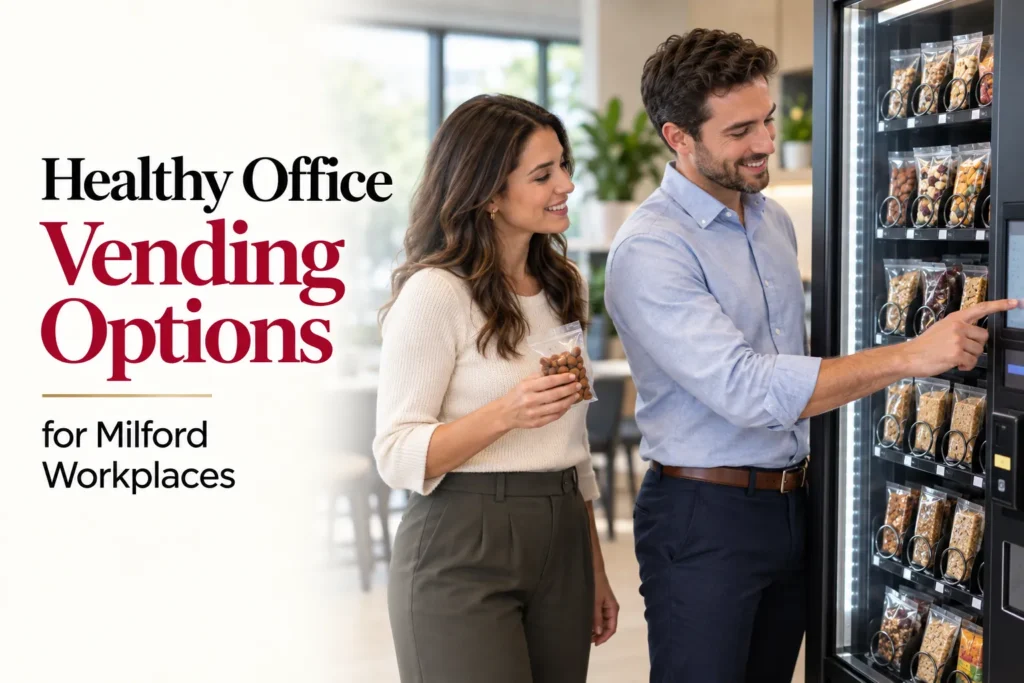
An office vending machine should give employees choices that fit different appetites, preferences, and moments in the workday. Someone looking for a small afternoon snack may want popcorn or crackers, while another employee may prefer nuts and a bottle of water between meetings. When the selection is too limited, employees have fewer choices that suit their preferences. Healthy vending options can make a Milford workplace’s refreshment area more useful by expanding those everyday choices. Building a worthwhile selection involves reviewing individual products, listening to employees, and making sure the equipment can support the items being considered. Taste, price, clear product information, and dependable availability all matter alongside nutrition.
What to Look for in Healthy Vending Options
A package can look wholesome without providing enough information to judge its contents. Terms such as “natural,” “energy,” or “made with vegetables” may highlight one characteristic while leaving other details less obvious. Compare the Nutrition Facts label and ingredient list rather than selecting products entirely by their packaging or promotional claims.
For an office manager choosing nutritious vending options, the most useful approach is to compare similar products. Review different crackers against one another, for example, rather than expecting crackers, nuts, and fruit snacks to meet identical criteria. Each category can serve a different purpose within the overall selection.
Check the Serving Size and Package Size
Start by checking whether the package contains one serving or several. Nutrition information generally applies to the labeled serving, so eating an entire package may mean consuming more than the amounts listed for one serving. Package size also affects convenience: some employees want something small, while others want a snack to accompany food they brought from home.
Individually packaged products can simplify vending and make portions easier to identify. However, a smaller package is not automatically a healthier choice. Its ingredients and nutritional profile still need to be considered.
Review the Full Nutrition Label
Compare dietary fiber, sodium, saturated fat, and added sugars across similar products. A snack marketed for its protein content may have other characteristics worth reviewing before adding it to the machine. Looking beyond one highlighted nutrient gives your workplace a more consistent way to evaluate products.
There is no need to make every item fit one narrow profile. A varied selection gives employees room to choose according to their own needs while making alternatives to the existing products easier to find.
Healthy Workplace Snacks to Discuss With Your Provider
A good starting point is a range of products employees recognize and are willing to try. Include different flavors and textures rather than filling every available slot with bars or replacing all savory snacks with sweet alternatives. Confirm availability, package compatibility, and pricing with your provider before deciding on the final selection.
The following categories offer useful starting points for that discussion. Specific products should be assessed individually, and the examples do not represent a confirmed Berkshire Food inventory.
Nuts, Seeds, and Roasted Chickpeas
Packaged nuts, seeds, and roasted chickpeas can add variety for employees who want something different from chips or cookies. Compare plain, lightly salted, flavored, and sweetened versions because the ingredients and nutrient amounts can vary. Consider whether the package size and price make sense for an everyday workplace purchase.
These products also illustrate why clear ingredient information matters. Do not assume that a snack suits every employee simply because it appears in a healthier selection. Keep alternatives available and allow employees to review the specific product label.
Whole-Grain Crackers and Lightly Seasoned Popcorn
Whole-grain crackers and lightly seasoned popcorn are options for employees who enjoy crunchy snacks. Look at the ingredient list and compare fiber, sodium, and saturated fat across the products being considered. Coatings, flavorings, and preparation methods can make a meaningful difference between otherwise similar items.
Familiar flavors may be a practical place to begin. Employees might be more willing to try a recognizable cracker or popcorn variety than an unfamiliar specialty snack, particularly when the new item is priced competitively.
Selected Fruit Snacks and Bars
Unsweetened dried fruit and selected oat or nut bars may appeal to employees who prefer sweeter snacks. Review added sugars, serving size, and ingredients rather than assuming all fruit-based products or granola bars are alike. The product should also be convenient to eat during a normal break.
Bars deserve an individual review, especially when packaging emphasizes energy or protein. Ask which options employees have requested and compare those products with available alternatives. Taste and affordability will influence whether an item becomes a regular purchase.
Chilled Foods With Suitable Equipment
Yogurt, vegetable snack packs, and other refrigerated foods may broaden the selection where appropriate equipment is available. Before choosing them, confirm that the proposed machine can maintain the required storage conditions and dispense the packaging correctly. Product handling and rotation also need to suit the items being offered.
A standard shelf-stable snack machine should not be used as though it were refrigerated food equipment. If employees want a wider chilled selection, discuss whether refrigerated vending or another break room format would better accommodate those needs.
Include Beverage Choices in the Vending Review
Drinks are part of the overall refreshment selection, so they deserve the same attention as snacks. Plain water, unsweetened sparkling water, and unsweetened tea are options to discuss alongside existing beverages. Check individual labels because bottled teas, flavored waters, and similar-looking drinks can have different ingredients and added sugar content.
Also consider whether employees have choices that do not contain caffeine. A beverage selection should accommodate different preferences rather than assuming everyone wants an energy drink or a sweetened beverage during a break. Keep the focus on providing useful alternatives employees can identify easily.
Build a Better-for-You Vending Selection Around Employee Preferences
A better-for-you vending program works best when employees have a reason to use it. Products that look appropriate on a planning sheet may receive little interest if the flavors are unfamiliar, the prices are too high, or the items do not match what people want during their breaks.
For a Milford office, begin with a short voluntary survey or a simple suggestion process. Include employees who work different schedules so the selection does not reflect only the people present during a typical daytime meeting. Ask about products and purchasing preferences without requesting personal health information.
Useful questions include:
- Which current snacks and drinks do you buy most often?
- What would you like to see added to the machine?
- Do you prefer savory, sweet, crunchy, or chilled options?
- What price feels reasonable for a regular snack?
- Are you usually buying a small snack or something to accompany lunch?
Use the responses to identify a manageable group of products to discuss with your provider. You do not need to fulfill every request immediately. Start with choices that receive consistent interest and can be supplied in a practical format.
Match the Product Selection to the Vending Equipment
The desired product range and the equipment need to work together. Package dimensions, dispensing mechanisms, refrigeration, and available capacity can affect which items are suitable. Confirm compatibility before ordering products so a promising new snack does not become a source of dispensing problems.
A compact machine may need a focused selection, while a larger setup may provide room for more product categories. Think about how many slots should be allocated to popular items and how much space is available for trials. Expanding variety is useful only when the machine can keep the most requested products available.
Berkshire Food’s guide to workplace vending and refreshment planning explains how product selection, equipment, stocking, and service support fit together. Those broader planning decisions provide the foundation for introducing healthier choices into an existing break room.
Make Healthier Choices Easy to Find and Buy
Adding new products will have limited value if employees cannot identify them or understand their prices. Where the equipment allows, use clear product names and make relevant product information accessible before purchase. Employees should be able to distinguish similar items without guessing which package they will receive.
Avoid broad claims that suggest every item in a designated row meets the same nutritional or dietary needs. Specific product information is more useful than a general “wellness” label. Employees can then choose according to their preferences rather than relying on an unclear category name.
Keep Prices Within Everyday Reach
A product may receive enthusiastic survey responses but few purchases if its price is higher than employees expect. Compare prices across the proposed selection and ask whether another package size or similar product would be more suitable. Include alternatives at different price points where possible.
If the business is considering contributing toward refreshments, discuss the available arrangements with the provider. Any contribution should have a clear budget and be explained consistently to employees.
Consider Access Across the Workday
The vending area should be accessible when employees actually take breaks. If staff work early, late, or staggered schedules, check whether they can reach the machines during those hours. A well-stocked machine in an inaccessible room does little for employees working outside the usual office schedule.
Placement also affects convenience. Review nearby doors, walkways, seating, and other break room features so employees have room to browse and purchase without blocking the shared area.
Keep Wellness Vending Options Available Through Regular Reviews
Introducing wellness vending options is an ongoing process. Employee preferences may change, new products may become available, and workplace attendance may fluctuate. Agree on how the selection will be reviewed so adjustments are based on actual use rather than assumptions.
Start with a manageable trial instead of replacing the entire machine at once. Retain familiar items while testing several alternatives across different categories. This makes it easier to see which additions employees want to keep.
Look Beyond Sales Totals
Sales figures need context. A product that repeatedly sells out may record fewer purchases than its true demand would support. An item that remains available but attracts little interest may have a pricing, visibility, flavor, or portion-size issue.
Review purchases alongside stockouts and employee feedback. Before removing a product, ask whether a different placement, package size, or similar alternative would address the problem.
Discuss Rotation and Substitutions
Ask how products are rotated and what happens when a selected item is unavailable. A substitution should ideally serve a similar purpose, particularly when employees have requested a specific type of snack or beverage. An agreed alternative can help maintain variety without making the selection unpredictable.
For refrigerated products, discuss the handling and service requirements associated with the proposed foods. The selection should remain practical to maintain, not simply appealing when it is first installed.
Plan a More Useful Vending Selection for Your Milford Team
Healthy office vending starts with making everyday choices more varied and convenient. Review the products employees already use, identify worthwhile additions, and confirm that the equipment and service arrangements can support the new items. A balanced selection should reflect taste, nutrition information, price, and the way people use the break room.
Businesses considering workplace refreshment services in Milford, CT can discuss their current vending setup and employee preferences with Berkshire Food. Share the products your team has requested, your available space, and any concerns about availability or service.
Contact Berkshire Food to explore healthy vending options for your Milford workplace and plan a selection that fits your team’s everyday needs.
Frequently Asked Questions
Options to consider include plain or lightly salted nuts, seeds, roasted chickpeas, whole-grain crackers, lightly seasoned popcorn, and selected fruit-based snacks. Water and unsweetened beverages can expand the drink selection. Review individual labels because ingredients, sodium, added sugars, and serving sizes vary within each category.
No. Protein bars differ in their ingredients, added sugars, saturated fat, and portion sizes. A protein claim highlights one characteristic rather than describing the entire product. Compare similar bars and consider employee preferences, pricing, and how each option fits into the broader snack selection.
No. You can add alternatives while keeping familiar products available. A gradual trial gives employees time to explore the new selection and provides useful feedback about demand. Review purchases, pricing, and availability before deciding which products should remain or be replaced.
A varied selection can provide more options, but individual products still need to be checked. Make ingredient and allergen information accessible, and avoid assuming that terms such as vegan or gluten-free indicate overall nutritional quality. Ask employees about product preferences without requiring them to disclose personal medical information.
Only equipment designed for the relevant storage requirements should be used for perishable products. A shelf-stable snack machine may not be appropriate for yogurt, vegetable packs, or other chilled foods. Confirm refrigeration, packaging compatibility, and service requirements with the provider before adding these products.
Use employee feedback together with purchasing information. Check whether products sell consistently, repeatedly run out, or remain unsold. Price and visibility may affect demand, so a low sales total does not always mean employees dislike the item. Review the trial with your provider before making changes.
Pricing varies by product, brand, package size, and service arrangement. Some alternatives may cost more than existing items, while others may be comparable. Request prices for the proposed selection and discuss substitutions if particular products exceed the range employees are comfortable paying.
Review your current selection, gather employee suggestions, and note your equipment, approximate attendance, and employee work schedules. Share those details with Berkshire Food to discuss suitable products and service options. Starting with a focused group of additions can make the first review easier to manage.