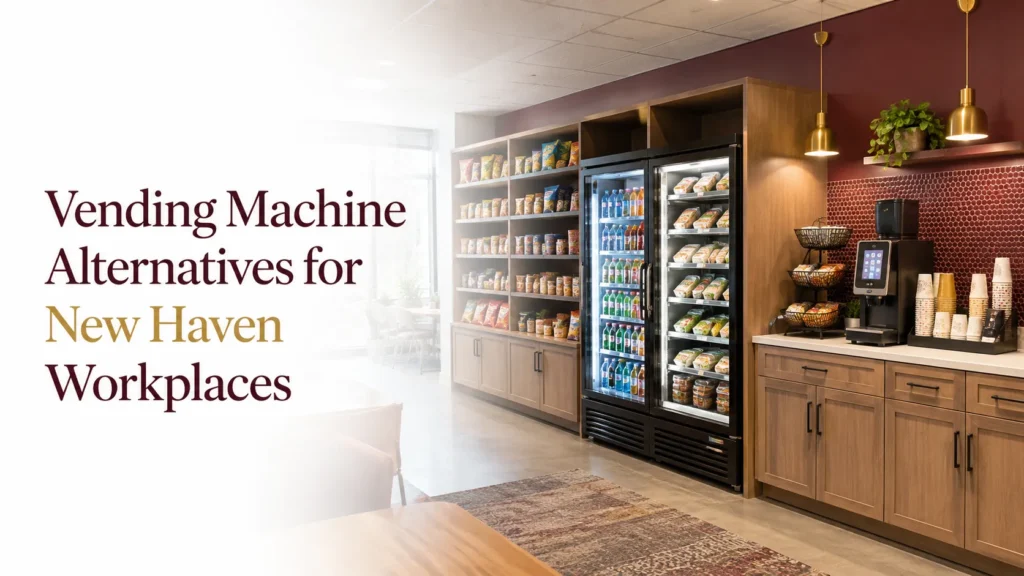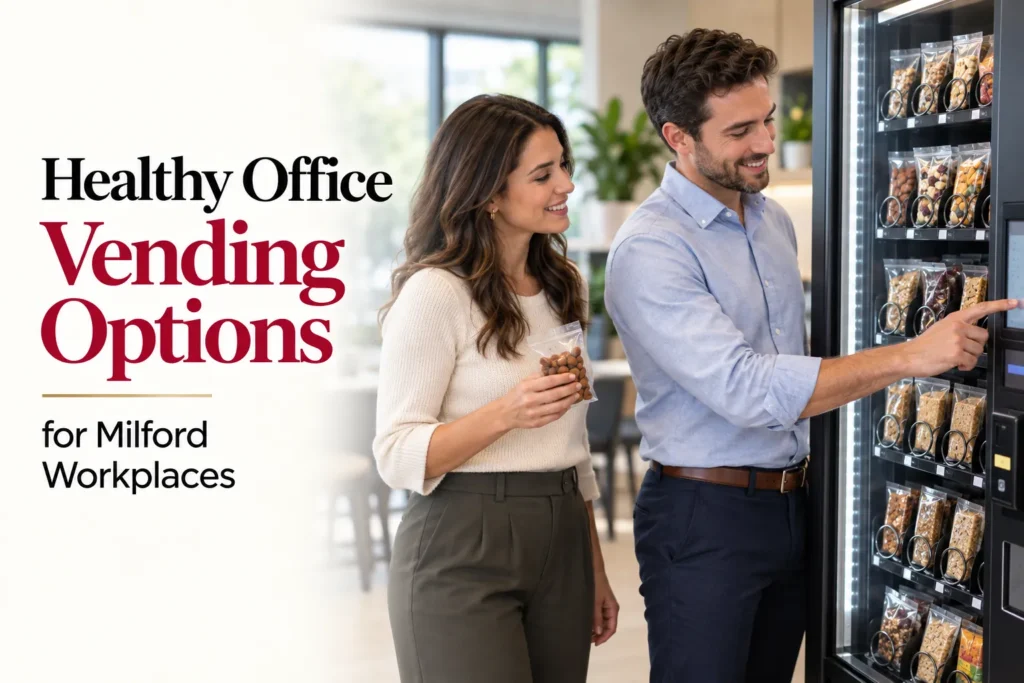

Workplace food and beverage needs can vary significantly from one Bloomfield business to another. A small professional office may need a convenient way to provide employees with snacks and drinks, while a larger workplace may want a broader selection of food, beverages, and break room supplies. Because of those differences, businesses should choose a refreshment program based on how their workplace operates rather than simply selecting a vending option.
Office vending machines are one way to provide convenient workplace refreshments, but they are not the only solution. Businesses can also consider micro markets, pantry service, office coffee programs, or combinations of several services. Each option offers a different balance of product variety, convenience, space requirements, management, and employee experience.
Understanding those differences can make it easier for Bloomfield businesses to choose a refreshment approach that matches how their workplace actually operates.
For an overview of traditional workplace vending and what businesses can expect from a vending program, see Berkshire Food’s Office Vending Machine Services Guide. The broader guide provides useful context before comparing vending with other workplace refreshment options.
Why Businesses Should Compare Workplace Refreshment Options
A workplace refreshment program should solve a real employee need rather than simply add equipment to a break room. Employees may want convenient access to snacks during a short break, beverages throughout the day, coffee in the morning, or more substantial food options when leaving the workplace is inconvenient.
The size of the workplace also matters. A small office with a limited break room may not need the same type of program as a large facility with multiple departments and shifts. Similarly, a workplace where employees spend most of the day at desks may have different refreshment needs from a manufacturing, warehouse, or service environment.
This is why comparing break room solutions should involve more than the equipment itself. Businesses should look at product variety, employee usage, available space, service requirements, and how much day-to-day involvement the office team wants to have.
Start With the Workplace, Not the Equipment
The first question should be what employees need during the workday. If employees mainly want quick snacks and beverages, vending may be the best solution. If they want a wider range of food and the workplace has enough space for an open self-service area, a micro market may be worth considering.
Other businesses may place more emphasis on complimentary snacks, coffee, or stocked break room supplies. In those cases, pantry or coffee service can play a larger role.
The right approach depends on the workplace rather than on whether a specific type of equipment is gaining popularity.
Office Vending Machines: A Convenient Traditional Option
Office vending machines remain a practical way to provide employees with snacks and beverages without requiring a full break room store. A vending machine can fit into a relatively compact space and provide access to products throughout the workday.
For businesses considering office vending machines, the product mix can typically be adjusted around the needs of the workplace. Snacks, bottled beverages, healthier choices, and other products can be selected based on employee preferences and purchasing patterns.
The main strength of vending is convenience. Among the practical benefits of office vending machines is that employees can quickly purchase snacks or drinks without leaving the workplace, while the business avoids operating a full cafeteria or retail-style break room.
When Vending May Make Sense
Vending can be a practical choice for businesses that have limited break room space or want a relatively straightforward way to provide employees with convenient food and beverage access. It can also work well when employees primarily need individual snacks and drinks rather than a large variety of meals.
For workplaces with predictable schedules and straightforward refreshment needs, a traditional vending program may provide the level of convenience employees expect without requiring a larger physical setup.
What Vending May Not Provide
The main limitation is product variety. A vending machine has a fixed amount of space, so the selection is naturally more constrained than an open market or larger stocked break room.
Businesses should also consider whether employees want more substantial meals, fresh food, or a wider range of products. If those needs are significant, another refreshment format may provide more flexibility.
Office Vending Alternatives for Broader Employee Needs
Businesses looking beyond traditional vending have several options. Office vending alternatives include self-service micro markets, managed pantry programs, and dedicated coffee service.
The important distinction is that these services are not necessarily competing replacements. In many workplaces, they can complement one another. A business may use vending for convenient packaged snacks while also providing coffee or pantry products, for example.
The right combination depends on employee demand, workplace size, available space, and the type of experience the business wants its break room to provide.
Vending vs Micro Market: How the Two Compare
The vending vs micro market decision often comes down to variety, space, and the type of shopping experience employees want.
A vending machine provides products through a compact, enclosed format. Employees select an item and complete their purchase through the machine. A micro market creates a more open retail-style environment where employees can browse a larger selection before purchasing.
For businesses with enough space and stronger demand for variety, a micro market can provide a broader workplace food experience. Employees may have access to more snacks, beverages, fresh food, and meal choices than would typically fit inside a traditional vending machine.
When a Micro Market May Be Worth Considering
A micro market can be particularly relevant for larger workplaces or facilities where employees want more variety than a vending machine can accommodate. It can also provide a more flexible environment for offering fresh food and different product categories.
Berkshire Food’s office micro market service provides a self-service workplace format designed to give employees broader access to food and beverages.
However, a micro market generally requires more physical space than a traditional vending machine. Businesses should therefore consider the size and layout of the available break room before choosing this format.
When Traditional Vending May Be More Practical
A vending machine may be more appropriate when space is limited or when the workplace primarily needs quick access to individual snacks and beverages.
For a smaller Bloomfield office, installing a large market-style area may not provide enough additional value to justify the space it requires. In that situation, vending can provide a simpler solution.
Vending vs Pantry Service
The vending vs pantry service comparison involves a different type of employee experience.
With vending, employees generally purchase individual products from a machine. Pantry service can provide a stocked selection of snacks, beverages, fresh fruit, and other break room supplies for employees to use as part of the workplace’s refreshment program.
This distinction matters because pantry service is not simply another type of vending. It can be designed around a business’s broader break room culture and may include products that employees can access without using a vending machine for every item.
How Pantry Service Works
A managed pantry program can help businesses keep a break room stocked with snacks and beverages while reducing the amount of time office staff spend purchasing and replenishing supplies.
Berkshire Food’s office pantry service can include snacks, beverages, fresh fruit, healthier alternatives, and other break room supplies. This can make pantry service relevant for companies that want a more traditional stocked break room rather than a purchase-based vending model.
When Pantry Service May Be a Better Fit
Pantry service may appeal to businesses that view food and beverages as part of their employee experience and want to provide refreshments directly through the break room.
It can also be useful when management does not want office staff spending time creating shopping lists, purchasing products, transporting supplies, and repeatedly checking whether the break room needs restocking.
The decision should be based on the company’s goals, employee expectations, and the amount of space and management involvement available.
Office Coffee Service as Another Workplace Refreshment Option
Not every workplace refreshment need revolves around snacks. Coffee can be an important part of the daily break room routine, particularly in offices where employees gather in the morning or use shared spaces throughout the day.
A dedicated office coffee service can provide coffee, tea, equipment, supplies, and related workplace support. This can complement vending rather than replace it.
For example, a Bloomfield office might use vending for packaged snacks and cold drinks while maintaining a separate coffee station for employees throughout the day. This combination can provide different types of refreshments without requiring one service to handle everything.
Why Coffee and Vending Can Work Together
Vending and coffee address different employee needs. Someone may want a bottled drink or snack during the afternoon, while another employee may want coffee first thing in the morning.
Combining services can therefore create a more complete break room without forcing the business to choose a single refreshment format.
Comparing Employee Food Solutions
The right employee food solutions depend on the workplace environment and the level of variety employees expect.
A useful way to compare the major options is to look at what each service is designed to accomplish rather than trying to determine which one is universally appropriate.
| Refreshment option | Primary purpose | Product variety | Space needs | Best suited to |
|---|---|---|---|---|
| Vending | Convenient individual purchases | Moderate | Lower | Offices and workplaces needing compact convenience |
| Micro market | Broader self-service food access | Higher | Higher | Larger workplaces seeking more variety |
| Pantry service | Stocked employee refreshments | Flexible | Moderate | Businesses providing snacks and beverages as a workplace benefit |
| Coffee service | Daily coffee and beverage access | Focused | Low to moderate | Offices where coffee is a central break room need |
| Combined services | Broader refreshment program | Highest flexibility | Varies | Workplaces with multiple employee refreshment needs |
This comparison is a starting point rather than a fixed formula. A small company could benefit from combining vending and coffee service, while a larger workplace may find that a micro market provides the product variety its employees want.
Consider the Employee Experience
A refreshment program is part of the workplace environment. Employees notice whether the break room has useful choices, whether popular products are consistently available, and whether the setup fits the way they work.
That means businesses should consider how employees interact with the service. Do they need something they can grab in less than a minute? Do they want to browse several meal options? Would they value complimentary snacks? Are coffee and beverages more important than packaged food?
Answering these questions can help businesses move from a generic refreshment plan to a program that reflects the actual workplace.
Convenience During the Workday
Convenience is one of the main reasons businesses invest in workplace refreshments. Employees may not have enough time to leave the property during every break, and some facilities operate on schedules where off-site food access is inconvenient.
Having refreshments available on-site can provide employees with another option during the workday. The specific service should match how much variety employees need and how much physical space the business can dedicate to the program.
Product Variety and Employee Choice
Some workplaces may be satisfied with a focused selection of snacks and beverages. Others may have employees asking for fresh food, healthier choices, specialty beverages, or more substantial meal options.
A vending machine can accommodate a focused selection of office vending machine products, while a micro market or pantry program may provide more room for variety. Businesses should look at employee requests rather than assuming that every workplace needs the same selection.
Space and Workplace Layout Matter
Physical space is an important part of choosing between workplace refreshment options.
A vending machine can often fit into a relatively compact area, making it practical for offices where the break room has limited floor space. A micro market generally requires a more open area where employees can browse products and complete purchases.
Pantry service has different space requirements because the program may need shelving, cabinets, refrigerators, counters, or other storage.
Before choosing a service, businesses should evaluate the actual break room layout. Consider where employees enter, where food and beverages can be stored, how much traffic moves through the area, and whether the available space can support the intended refreshment experience.
How Workplace Size Can Affect the Decision
The number of employees using a refreshment program can also influence which option makes sense. A smaller office may not have enough demand to justify a large self-service market. A vending machine or coffee program may provide sufficient convenience without requiring significant space.
As employee numbers increase, product variety can become more important. Larger workplaces may have enough demand to support a micro market or a combination of services.
However, employee count should not be the only consideration. Shift patterns, workplace type, employee preferences, and break room space can all affect usage.
Build a Refreshment Program Around Actual Demand
One of the most effective ways to choose between refreshment options is to start with current employee behavior.
Businesses can review what employees currently purchase, which products they request, how frequently they use the break room, and what complaints or requests office managers receive. This information can provide a clearer picture than generic recommendations.
If employees mainly want cold drinks and packaged snacks, vending may address those needs. If they frequently request fresh food and greater variety, a micro market may be worth considering. If the business already purchases large quantities of snacks for employees, pantry service could provide a more structured way to manage that program.
The goal is to match the service with actual demand rather than adding features employees are unlikely to use.
Combining Workplace Refreshment Options
Businesses do not necessarily need to select one service and eliminate every other option. Combining services can sometimes create a more complete break room.
For example, a workplace might use vending for quick packaged snacks and beverages while providing coffee through a dedicated coffee service. Another business may use a micro market for food and beverages while maintaining a pantry area with complimentary snacks.
The combination should be practical for the available space and aligned with the company’s refreshment goals.
When a Combination May Make Sense
A combined program can be useful when employees have different needs throughout the day. Coffee may be most important in the morning, vending may provide convenient afternoon snacks, and a micro market may provide meal options during lunch.
The more services a business adds, the more important it becomes to coordinate stocking, space, equipment, and support; for the vending portion, managed vending services can help clarify restocking and maintenance responsibilities. A refreshment provider that can support multiple workplace services can simplify that process.
Choosing Workplace Refreshment Options in Bloomfield
For Bloomfield businesses, the best starting point is to identify the specific refreshment needs of the workplace. Consider the number of employees, available break room space, work schedules, employee preferences, desired product variety, and whether refreshments are intended to be purchased or provided as an employee benefit.
Businesses looking for a straightforward, compact solution can consider vending. Companies that want more food variety can compare a micro market. Those interested in a stocked break room can look at pantry service, while offices where coffee is central to the daily routine may want dedicated coffee service.
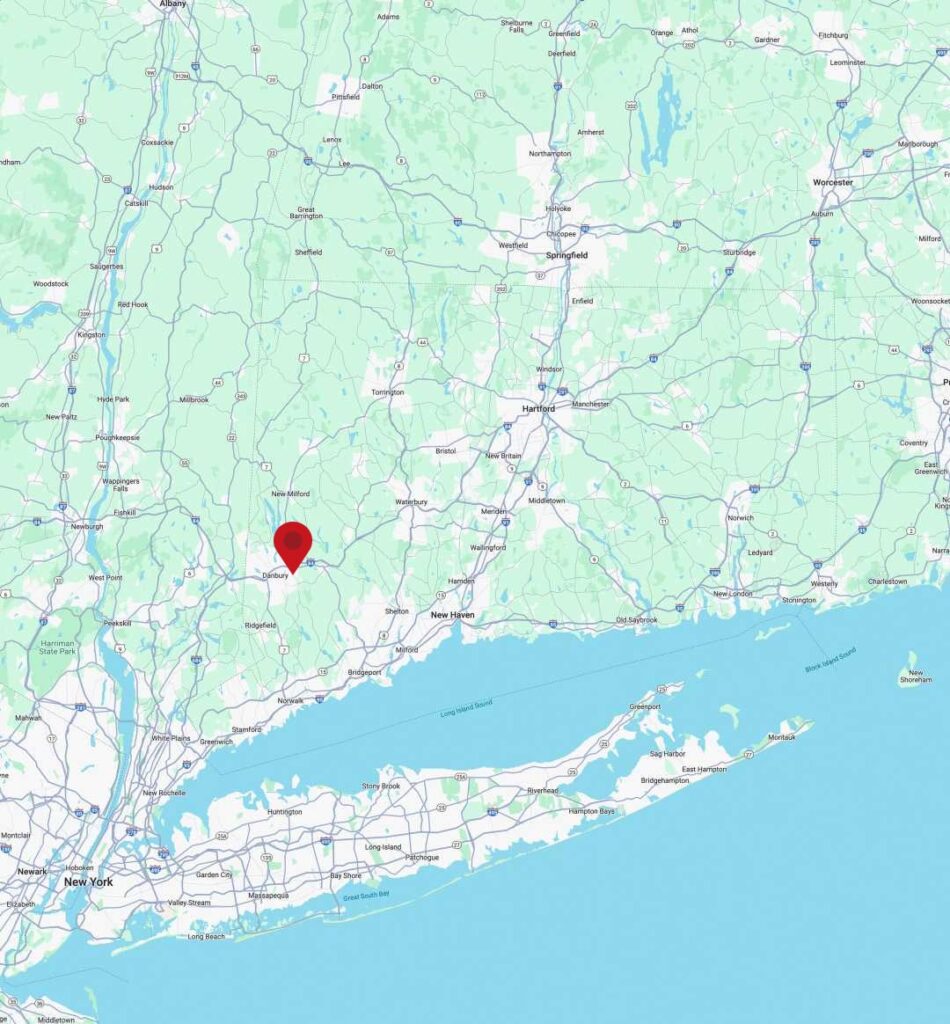
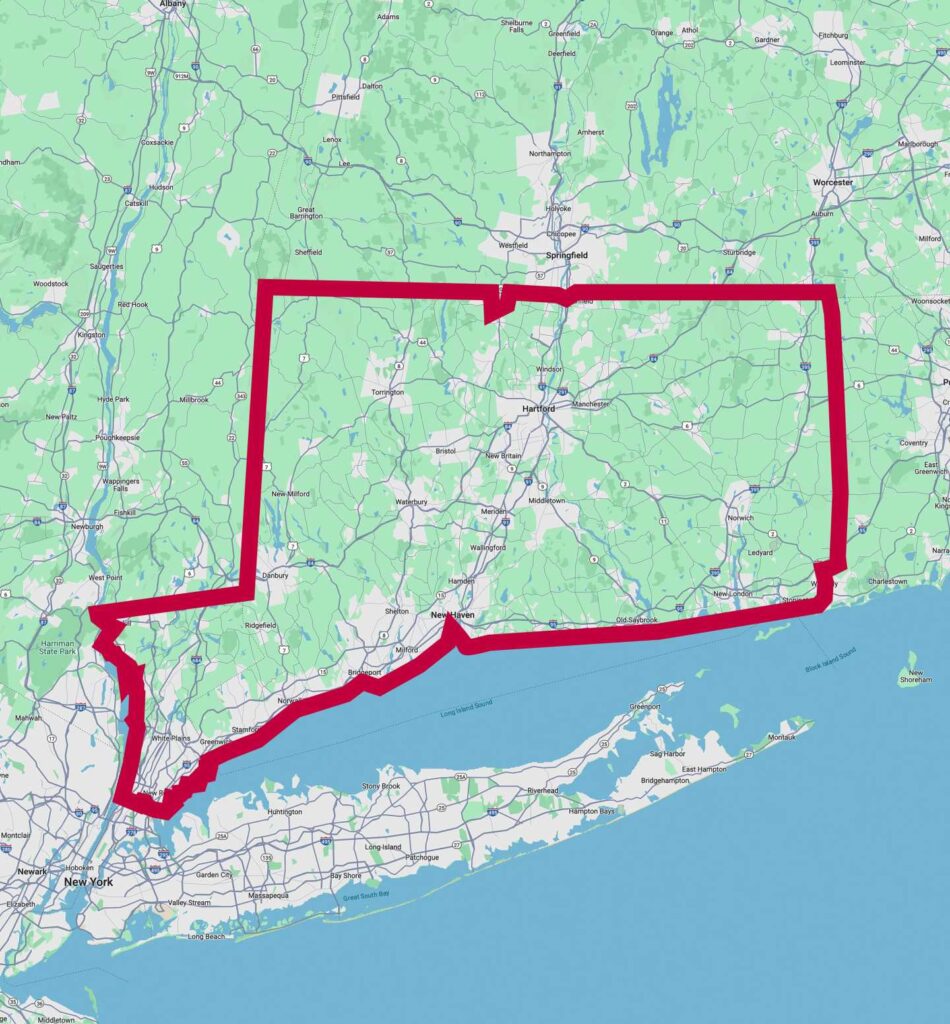
Berkshire Food serves workplaces throughout Connecticut and offers multiple workplace refreshment services, allowing businesses to consider a program around their particular environment rather than relying on one standard setup.
Businesses can also review the Bloomfield workplace refreshment service area to see how Berkshire Food approaches local workplace service in the community.
Making a Practical Break Room Decision
Choosing between vending and other refreshment services does not have to be an all-or-nothing decision. The most useful comparison starts with the employee experience and works backward toward the service.
A vending machine may provide the convenience and compact footprint a workplace needs. A micro market can offer a broader self-service selection when more space and variety are available. Pantry service can support businesses that want a stocked break room, while coffee service can address one of the most common daily workplace beverage needs.
The important thing is to evaluate each option against the workplace’s actual requirements. Businesses should consider what employees currently use, what they are asking for, what the break room can accommodate, and how much responsibility the office team wants to take on.
For Bloomfield businesses considering a workplace refreshment program, Berkshire Food provides vending, coffee, micro market, pantry, and other workplace refreshment services for businesses throughout its Connecticut service area. Building the program around employee needs can help create a break room that is convenient, practical, and appropriate for the workplace.
Frequently Asked Questions
Common office vending alternatives include micro markets, pantry service, office coffee service, and combinations of multiple workplace refreshment services. The appropriate option depends on employee needs, available space, product variety, and whether products are purchased individually or provided by the business.
A vending machine provides products through an enclosed machine with a relatively compact footprint. A micro market creates a more open self-service environment where employees can browse a wider selection of snacks, beverages, and potentially fresh food before completing a purchase.
With vending, employees typically purchase individual products from a machine. Pantry service can provide a stocked selection of snacks, beverages, fresh fruit, and break room supplies for employees to access as part of the workplace refreshment program.
Larger workplaces may have more demand for product variety and enough space to support a micro market. However, employee preferences, workplace layout, schedules, and expected usage should also be considered before selecting a service.
Yes. Vending can be a practical option for smaller offices because it can provide convenient access to snacks and beverages without requiring the amount of space associated with a larger market-style break room.
Yes. Vending and coffee service can address different refreshment needs. A business may use vending for snacks and cold beverages while providing coffee and tea through a dedicated workplace coffee program.
Businesses should consider employee preferences, workplace size, break room space, product variety, work schedules, service requirements, and whether refreshments are purchased by employees or provided by the employer. These factors can help determine which format aligns with the workplace.
Start by reviewing current employee demand and identifying gaps in the existing break room. Employee feedback, purchasing patterns, available space, and the types of food and beverages employees request can all help guide the decision.