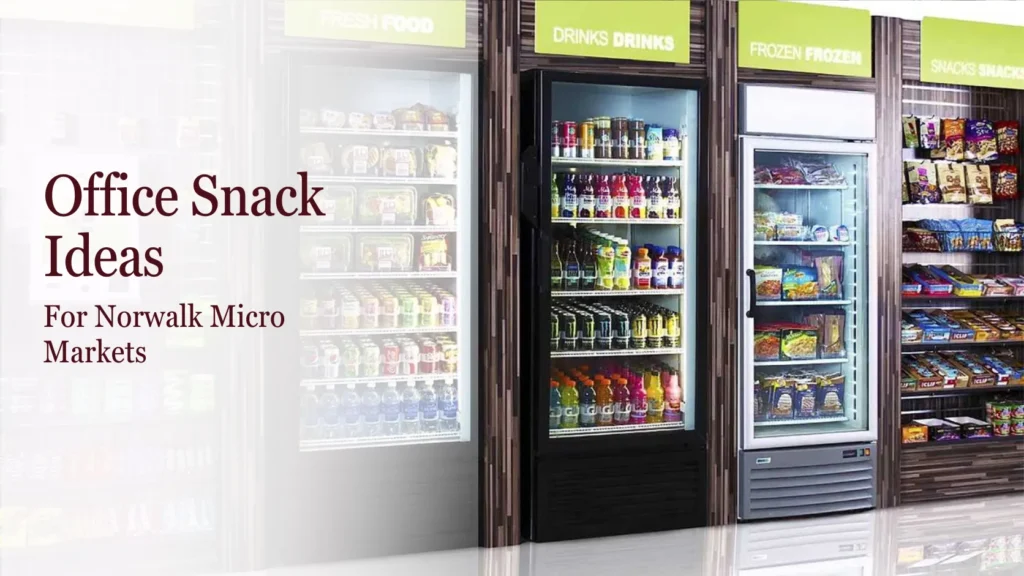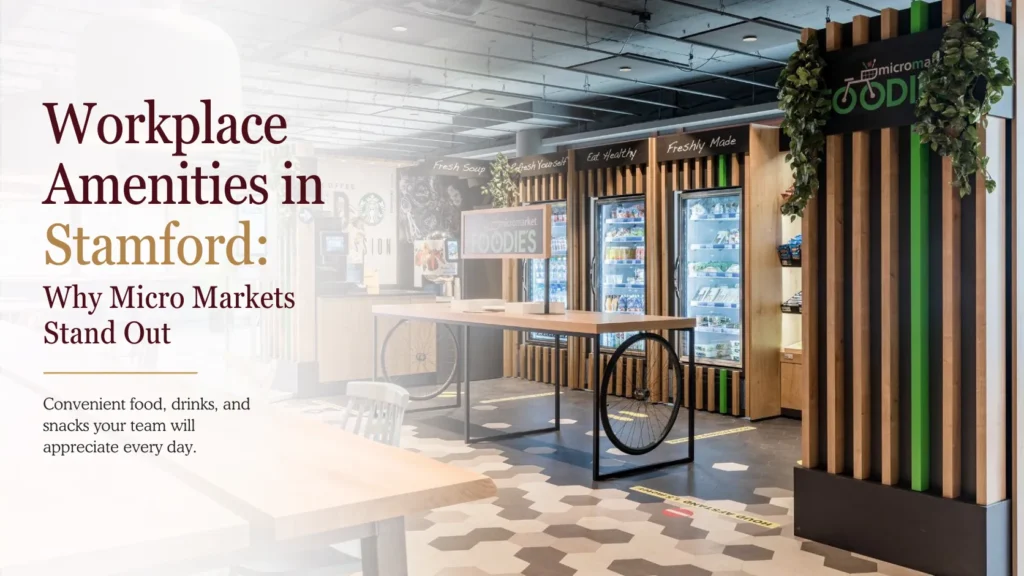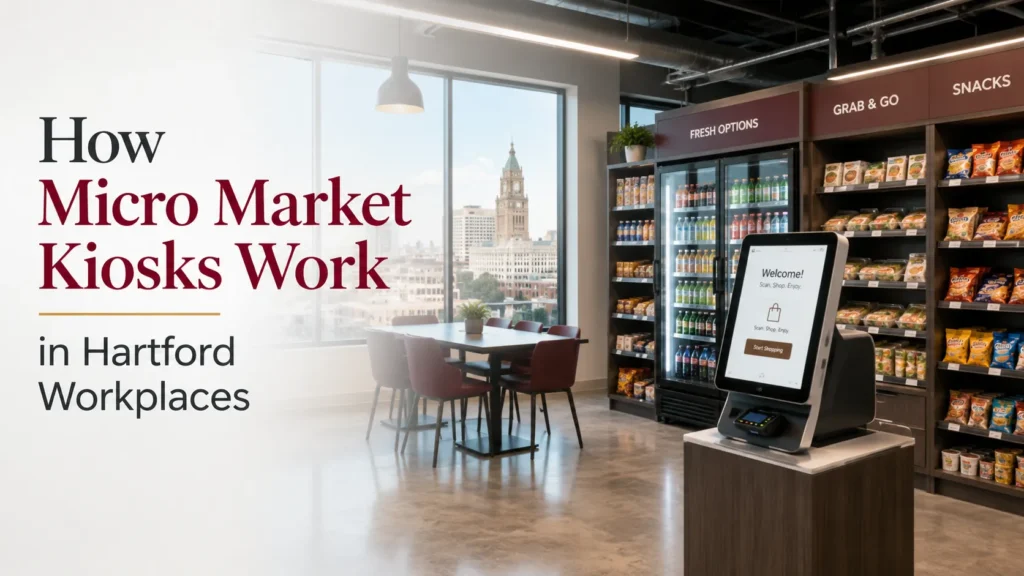

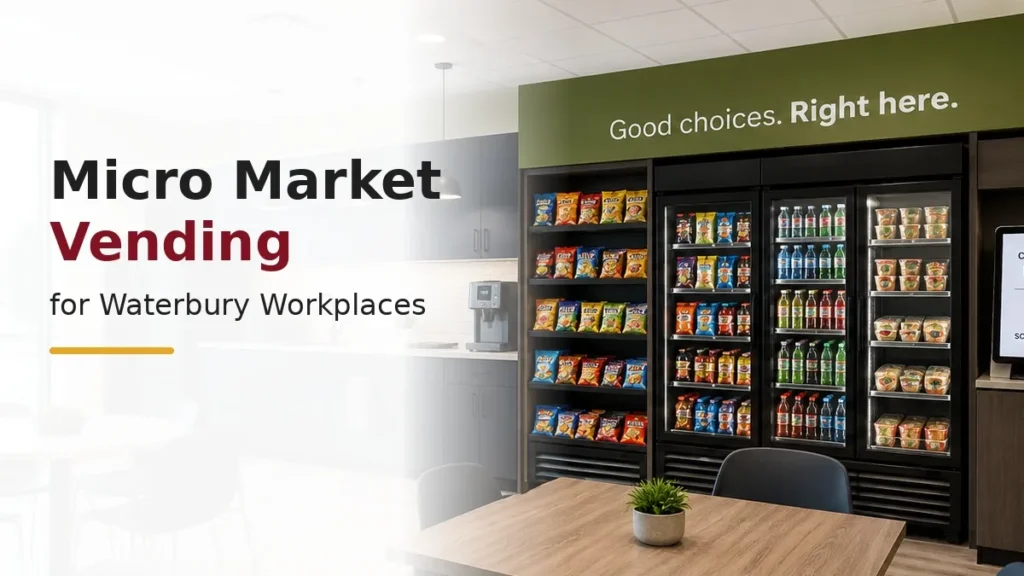
Micro market vending gives employees access to snacks, beverages, fresh food, and grab-and-go items through an open, self-service setup. Instead of selecting products from behind a traditional vending machine window, employees can browse shelves and refrigerated displays before checking out at a kiosk.
For Waterbury workplaces, the success of a micro market depends on careful planning. The available room, number of employees, work schedules, product selection, and traffic flow all influence how the market should be arranged. A setup that works well in a large facility may not suit a smaller office, even when both workplaces want to offer similar food and beverage options.
This guide explains what Waterbury employers should consider before adding micro market vending to an existing break room or planning a new refreshment area.
What Does Micro Market Vending Include?
Micro market vending combines elements of vending, unattended retail, and a small convenience market inside the workplace. Products are displayed on open shelves, in refrigerated cases, or in coolers, allowing employees to view labels and make selections at their own pace. A self checkout kiosk is generally used to complete purchases.
The exact setup can vary from one workplace to another. Some locations may need a compact market with snacks, drinks, and a single cooler. Others may have enough room for meals, refrigerated foods, several shelving units, and a larger checkout area. The layout should reflect the space available and how employees are likely to use the market during the workday.
Start With the Space You Already Have
Before choosing shelves, coolers, or a kiosk, employers should review the room where the micro market will be placed. The market must fit comfortably without blocking doors, seating, appliances, or major walkways. Electrical access, lighting, wall space, and existing counters may also affect the final arrangement.
A smaller Waterbury office may be able to use one wall for a compact market while preserving most of the room for tables and chairs. A larger workplace may be able to create separate areas for shopping, checkout, food preparation, and seating. The right plan makes use of the room as it exists rather than forcing too much equipment into the available space. Businesses planning a new setup can also review break room design ideas to create a more functional employee area.
Measure the Usable Area
Measure the walls, corners, door clearances, and open floor space that can realistically be used. Do not count areas that employees need for walking, opening refrigerator doors, or accessing other equipment.
Review Electrical Access
Coolers, refrigerated displays, and checkout equipment require appropriate access to power. Existing outlets and equipment placement should be considered before the market layout is finalized.
Protect the Main Walkways
Employees should be able to enter, browse, pay, and leave without crossing through crowded seating areas or blocking access to microwaves, sinks, or shared refrigerators.
Plan the Shopping Flow Before Choosing Equipment
A practical micro market layout follows a clear path. Employees should be able to see the available products, move between shelves and coolers, and reach the checkout area without unnecessary backtracking. Poor placement can create congestion, especially during common break and meal periods.
For many workplaces, it makes sense to position snacks and shelf-stable items first, followed by refrigerated food and beverages, with the kiosk placed near the end of the shopping path. The exact sequence may change based on the room, but the experience should remain easy to understand. A well-planned flow also helps keep shopping activity separate from employees who are preparing food or sitting at tables.
Keep Popular Products Accessible
Frequently selected drinks, snacks, and meals should be easy to reach. Avoid placing high-demand items in tight corners where several employees cannot browse comfortably.
Make the Checkout Point Visible
The kiosk should be easy to identify from the product area. Employees should not have to search for it or cross the room after making their selections.
Leave Room Around Cooler Doors
Refrigerated doors need enough clearance to open fully without interfering with chairs, counters, or other employees moving through the market.
Build a Product Mix Around the Workday
The right product selection should reflect when employees use the break room and what they are likely to need. A market serving a traditional office schedule may see stronger demand around the morning, lunch, and afternoon break periods. A workplace with staggered hours may require a broader mix that remains useful throughout the day.
Rather than filling every shelf with similar items, employers should consider a balanced combination of familiar snacks, beverages, grab and go food, and more substantial meal choices. Variety is useful, but the market should not feel cluttered or difficult to browse. Product selection can be reviewed over time as employee preferences and workplace use become clearer.
Morning Selections
Coffee-adjacent snacks, breakfast items, water, juice, and other convenient choices may suit employees arriving at the beginning of the workday.
Lunch and Meal Options
Sandwiches, salads, wraps, refrigerated meals, and cold beverages can give employees more options during longer breaks.
Snacks and Beverages
A mix of familiar snacks, lighter choices, and drinks can support shorter breaks and different preferences throughout the day.
Consider Refrigeration Before Adding Fresh Food
Fresh and refrigerated products require more planning than shelf-stable snacks. Employers should determine how much refrigerated space is available, where coolers can be placed, and whether employees can browse them without blocking the rest of the break room.
The food selection should match the available equipment. A compact cooler may support a focused range of sandwiches, salads, beverages, or other chilled items, while a larger market may use separate refrigerated displays for food and drinks. Product handling and storage requirements also vary by item. Planning refrigeration early helps prevent a situation where the desired product range exceeds the practical capacity of the space.
Choose a Checkout Experience That Feels Straightforward
The checkout process is a central part of any self-service retail setup. Businesses planning a modern setup can also explore how micro market kiosks support smoother employee checkout experiences. Employees should be able to understand where to pay and move through the process without confusion. The kiosk should be visible, accessible, and positioned where users can complete a purchase without blocking others who are still browsing.
Employers should also consider the area around the kiosk. There should be enough room to hold selected items, complete the transaction, and move away from the checkout point. The market should include clear, simple instructions where needed, but the area should not become overloaded with signs. A tidy checkout area just makes the whole thing easier to walk up to and use.
Avoid Tight Checkout Corners
Placing the kiosk in a narrow corner may make it difficult for employees to use, particularly when another person is waiting behind them.
Separate Checkout From Food Preparation
The kiosk should not compete with microwaves, sinks, coffee equipment, or busy countertops. Separating these areas can reduce congestion during break periods.
Match the Market to Employee Schedules
A micro market should be planned around the way employees move through the workplace. Some offices have predictable lunch periods, while facilities with varied shifts may see smaller groups using the market at different times. These patterns affect the amount of space needed for browsing, the types of products offered, and the frequency with which certain items may be selected.
Waterbury employers should consider when employees arrive, how long their breaks typically last, and whether they have easy access to food outside the workplace. These questions do not determine one standard setup, but they help clarify which workplace food options may be most practical for the team.
Plan for Restocking and Everyday Organization
A micro market should remain easy to navigate after it has been in use for several weeks, not only on the day it is installed. Shelves, coolers, and displays need enough room to keep products visible and organized. Crowded shelves can make items harder to find, while too much space may make the selection feel limited.
Employers should also think about how the surrounding break room will be used. Waste containers, tables, microwaves, and coffee equipment should remain accessible without interfering with the market. A layout that supports straightforward restocking and daily employee use is more practical than one designed only around appearance.
Micro Market Vending vs. Traditional Vending
Traditional vending machines and micro markets can both provide convenient workplace refreshments, but the experiences are different. A vending machine keeps products enclosed and offers a compact footprint. A micro market uses open displays and refrigerated cases, allowing employees to browse a wider retail-style arrangement.
The better option depends on available space, expected use, and the types of products the workplace wants to offer. Businesses comparing different workplace solutions can also explore vending machine alternatives that provide more flexibility than traditional setups. Some Waterbury businesses may prefer the simplicity of vending machines. Others may want the broader display and grab-and-go format of a market. In certain workplaces, the two formats may also be used together to support different areas or employee needs.
| Planning Factor | Micro Market Vending | Traditional Vending |
|---|---|---|
| Product display | Open shelves and refrigerated cases | Products displayed inside machines |
| Space needed | Usually requires a defined market area | Can fit into a smaller footprint |
| Shopping experience | Retail-style browsing | Machine-based selection |
| Product variety | Can support snacks, drinks, and meals | Depends on machine configuration |
| Checkout | Self checkout kiosk | Payment at each machine |
For a broader overview of setup, operation, and workplace considerations, readers can also review the Complete Guide to Office Micro Markets for Connecticut Workplaces once the pillar article is live.
Questions to Ask Before Planning the Market
Before moving forward, Waterbury employers should have a clear understanding of the room, employee use, and the type of refreshment experience they want to provide. These questions can help identify practical priorities before equipment and products are selected.
- How much space can be dedicated to the market?
- Will the market replace an existing refreshment setup or work alongside it?
- When do employees use the break room most often?
- Is there room for refrigerated food and beverage displays?
- Can employees move through the area without blocking seating or appliances?
- What types of snacks, meals, and drinks are most relevant to the workplace?
- Where can the checkout kiosk be placed so it remains visible and accessible?
- How will the market fit with coffee, water, or other break room services?
How Berkshire Food Can Support Micro Market Planning
Berkshire Food provides office micro market service for workplaces across Connecticut and Upper Westchester County, NY. Businesses looking for workplace refreshment solutions in Waterbury, CT can explore customized options based on their break room space, employee needs, and the food and beverage options they want to provide.
For businesses considering micro market vending in Waterbury, the right setup should balance product variety with practical use of space. Employers can contact Berkshire Food to discuss the workplace, current break room, and refreshment options under consideration. The final setup should fit the room comfortably and stay easy for employees to use day to day.
Frequently Asked Questions
There is no single space requirement that applies to every workplace. A compact setup may use a portion of an existing break room, while a larger market may need a dedicated wall or separate area. The room should have space for shelves, refrigeration, checkout equipment, and safe employee movement. Doors, seating, appliances, and major walkways should remain accessible after the market is installed.
A smaller office may be able to use a compact market when the layout and product selection are planned carefully. Fewer shelves, one refrigerated unit, and a focused product range may provide useful variety without overwhelming the room. Employers should first evaluate available wall space, electrical access, employee traffic, and whether the setup will interfere with seating or food preparation areas.
A micro market may include packaged snacks, cold drinks, water, sandwiches, salads, breakfast items, refrigerated meals, and other grab-and-go products. The available selection depends on the equipment, refrigerated capacity, workplace preferences, and practical use of the space. A focused, organized mix is often more useful than overcrowding shelves with too many similar products.
The checkout area should be designed to feel clear and approachable. A visible kiosk, adequate standing room, and straightforward instructions can help employees understand where and how to complete a purchase. The kiosk should not be hidden behind displays or placed beside busy food preparation equipment where congestion could make the process less convenient.
A workplace does not necessarily have to remove existing vending machines when adding a micro market. The two formats may serve different parts of a building or provide different product options. Employers should review available space, employee use, and whether maintaining both formats creates a convenient refreshment setup rather than unnecessary duplication.
Fresh food planning should begin with refrigerated space, workplace schedules, and likely employee demand. Employers should consider whether the market has enough cooler capacity for the desired selection and whether products will remain easy to see and access. The food range should be practical for the workplace rather than based only on the number of choices available.
Begin by reviewing the current break room, available space, employee schedules, and the types of products the workplace wants to offer. Identify possible locations for shelves, coolers, and checkout equipment without blocking other areas. A Waterbury employer can then contact Berkshire Food to discuss whether micro market vending may fit the workplace and what planning steps should come next.