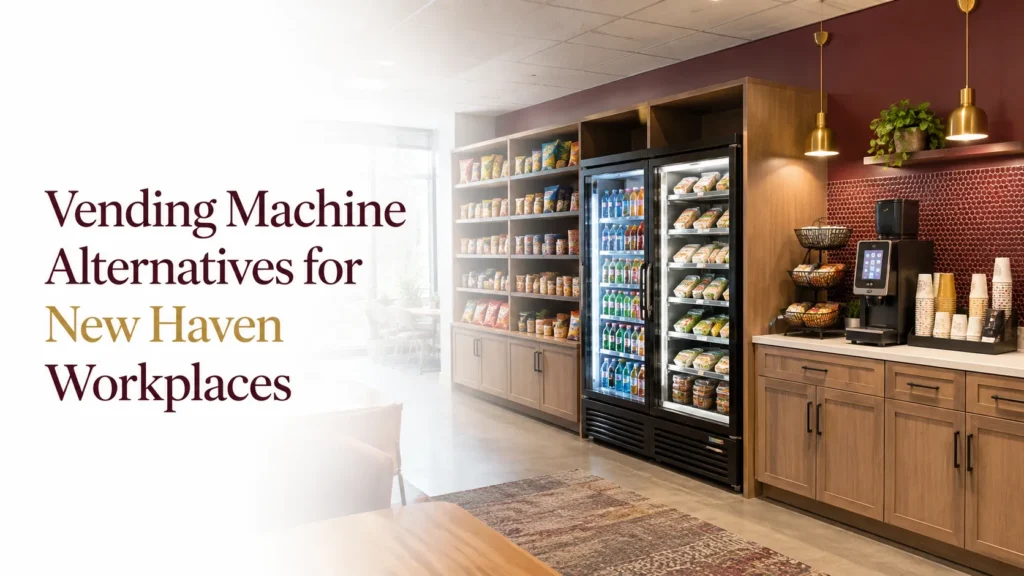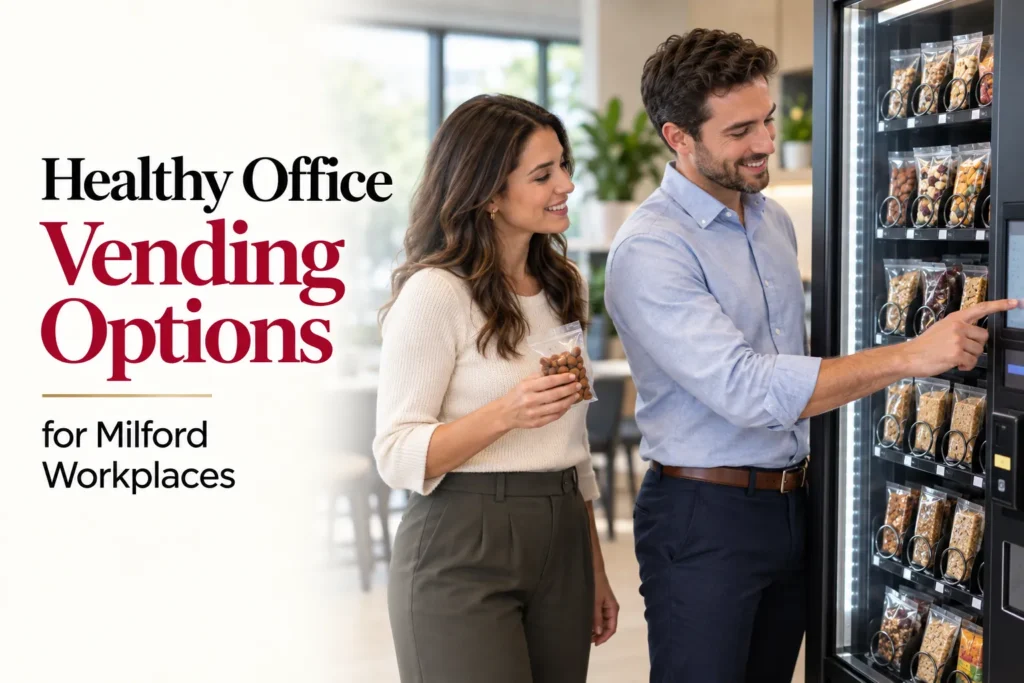

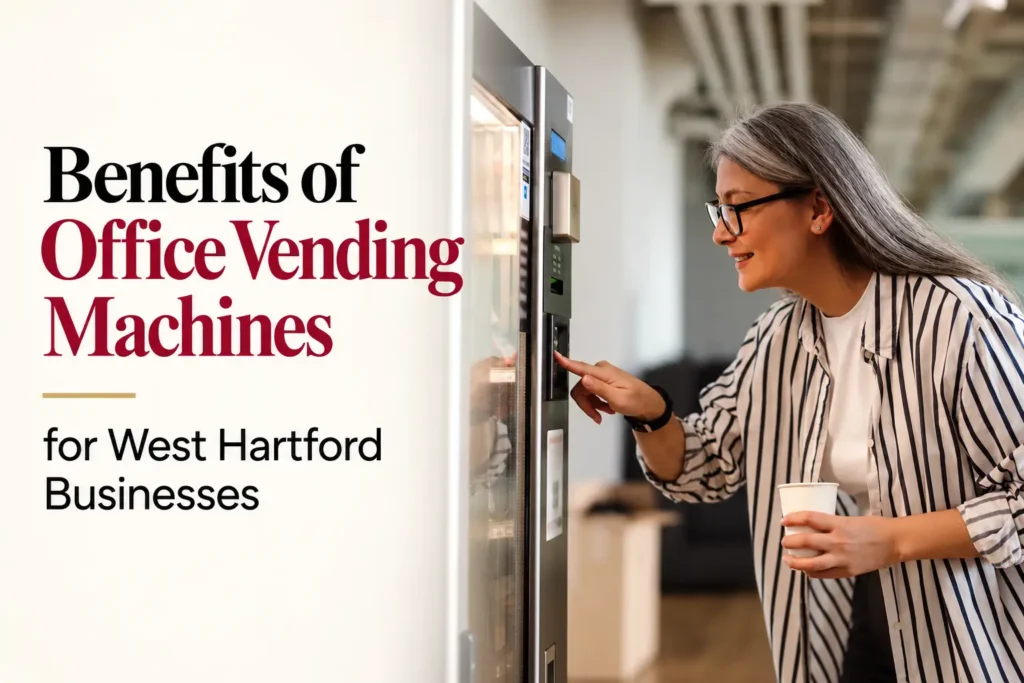
An employee has a few minutes between meetings, realizes they left their snack at home, and heads to the break room. Whether they find something useful there depends on the choices the business has made about workplace refreshments. A well-planned vending setup can make that everyday situation easier by keeping snacks and drinks within reach.
For West Hartford businesses, the benefits of vending machines at work start with convenient access, as it gives employees more choice, supports different schedules, and reduces the need for office staff to handle individual refreshment purchases
Make Short Breaks More Convenient
Leaving the building for a drink or snack rarely takes just a minute. Employees have to grab their things, walk to the car, find parking, and often wait in line, even when something’s nearby, that routine can take up most of the short break.
An on-site vending machine gives employees another option when they want something quickly. They can make a purchase and spend the rest of their break sitting down, catching up with a coworker, or stepping outside. It’s a minor change, but something that can make a difference over a week at work.
Convenient refreshments should support employees’ choices about how they spend their breaks. The goal is to make the workplace more comfortable while preserving the opportunity to leave the building when they prefer.
Provide Refreshments Across Different Work Schedules
Not every employee has the standard 9-5 routine. Some arrive early, some stay late, some work staggered shifts. A refreshment setup built around lunch time rush isn’t suitable for those taking a break at 7:00 pm. Before finalizing a setup, think about who’s actually in the building during the slower hours, not just the busiest ones.
This is where vending has a real advantage: as long as it’s stocked and reachable, it works the same at 7am or 9pm. An office with the occasional late meeting has different needs than one running regular evening shifts, so it’s worth asking employees on each schedule what they’d actually use, and building that into the initial product mix rather than adjusting later.
Location matters here, too. A machine behind a locked department door will not help employees elsewhere in the building. Choose a shared space that remains accessible during the hours your team needs it.
Give Employees More Choice in One Place
A vending selection works best when it reflects actual employee tastes rather than a generic default mix. Some employees may want a familiar salty snack, while others prefer nuts, crackers, or a snack bar. Drink preferences can vary just as much. A thoughtful mix means more employees can find something they’d actually buy, instead of skipping the machine and leaving the building because nothing in it appeals to them.
Berkshire Food’s office vending machine service includes customizable product selections, snack and beverage options, and multiple payment methods. When planning a setup, discuss which choices suit your employees and confirm the payment capabilities of the proposed equipment.
Build the Selection Around Actual Preferences
Start with a brief employee survey that asks about preferred products, acceptable price ranges, and payment habits. Make the questions specific enough to guide decisions. Asking employees to name a few items they would regularly purchase is more useful than asking whether they would like “more variety.”
After installation, compare that feedback with what people actually buy. A frequently requested item may sell slowly, while an overlooked option may become popular. Reviewing both feedback and purchasing patterns helps keep the selection relevant.
Include Options for Different Dietary Preferences
Labeling is significant as not all the workers can eat the same food. Question the provider about the course of ingredients and nutrition information, about any alternatives, and how the change in product is communicated. A product described as a healthier choice may still contain an ingredient that a particular employee avoids.
Variety works best when it is clear and practical. It’s better to create a solid, reliable core collection that the employees can always depend on, and then fill in a few open spots with new options.
Reduce Routine Refreshment Tasks for Office Staff
In some workplaces, keeping snacks available becomes an informal responsibility for a receptionist, office manager, or team assistant. They may collect requests, make store trips, submit receipts, and find space for extra supplies. That labor rarely shows up when anyone tallies the “cost” of an informal snack setup, but it’s real time taken from their actual job.
A managed vending program can reduce that workload when stocking and equipment support are included in the service agreement. Before choosing a provider, establish who handles replenishment, product rotation, cleaning, and technical problems. Clear responsibilities help prevent the machine from becoming another task that falls back on office staff.
Keep one internal contact for feedback and service coordination. That person should have a simple reporting process, rather than needing to investigate every unsuccessful purchase or equipment issue themselves.
Improve the Break Room Without a Full Renovation
Improving a break room doesn’t always mean new cabinetry, a bigger footprint, or a full redesign. Often it just means fixing one specific gap such as limited drink options, or no easy way to grab a packaged snack without leaving the building.
Start by observing how employees move through the space. The machine should be easy to reach, with enough room to make a selection and grab a purchase without blocking a doorway, refrigerator, or seating area. Have the provider confirm equipment dimensions, power needs, ventilation clearances, and delivery access before installation.
The surrounding details also matter. A nearby waste bin, a clean surface for setting down a drink, and comfortable seating can make the overall experience more useful. Consider the machine as part of the room employees use, rather than judging it only by how it looks in a product photograph.
Offer a Purchase-Based Refreshment Option
Businesses have different goals for employee refreshments. Some want to provide complimentary snacks, while others want convenient products that employees can purchase themselves. Vending can support the second approach by giving each person control over what they buy and how much they spend.
Discuss the commercial arrangement before treating vending as a budget solution. Confirm any applicable placement conditions, purchase expectations, equipment responsibilities, and product pricing. The details should be clear enough for the business to understand its commitment and for employees to know what to expect.
For broader planning context, Berkshire Food’s office vending machine guide explains the available formats and how vending compares with other workplace refreshment options. That comparison can help determine whether a purchase-based setup matches your goals.
Make Everyday Employee Support More Visible
Employees notice whether the practical details of their workplace function well. A clean, stocked machine with useful products can contribute to a break room that feels considered and maintained. Empty selections, unclear prices, or recurring payment problems can have the opposite effect.
These vending machine benefits depend on follow-through. Adding equipment alone does not establish a better employee experience, and vending should not be presented as a guaranteed way to improve productivity or retention. Its contribution is more specific: making a routine part of the workday easier.
So the real question isn’t “should we get a vending machine,” it’s “what’s actually frustrating our team day to day.” If refreshment access is one of those frustrations, vending is worthwhile addition.
Check Whether the Setup Delivers the Expected Benefits
Before installation, agree on what success actually looks like. That might mean reliable access during evening hours, fewer office supply runs, or a better drink selection. Pick a few clear priorities upfront so you have something concrete to judge the setup against later.
Once employees have had a few weeks to actually use the machine, check how it’s going. Worth asking:
- Are popular products available when employees want them?
- Can people pay using their preferred method?
- Are prices visible and easy to understand?
- Are purchase problems resolved promptly?
- Does the location work for employees across different schedules?
Use the answers to guide adjustments. Often, moving the machine, swapping a few products, or adjusting the stocking schedule improves convenience more than adding a second unit.
Plan a More Convenient West Hartford Break Room
The right vending arrangement starts with your employees, your space, and the problems you want to solve. A business with a compact staff lounge may prioritize a simple snack and drink selection, while a workplace with several departments may need to think more carefully about access and placement.
If you are exploring workplace refreshment services in West Hartford, discuss your employee count, busiest break periods, available space, and preferred products with Berkshire Food. Request a vending consultation to identify a setup that fits how your team uses the workplace.
Frequently Asked Questions
The main benefits include convenient access to snacks and drinks, more product choice, and refreshment availability across different schedules. A managed program can also reduce routine purchasing and stocking tasks for office staff. The results depend on suitable placement, reliable service, and products employees want to buy.
Yes, often, but it depends on daily attendance, expected purchases, available space, and the provider’s placement requirements. Look at how many people are actually on-site day to day, especially with hybrid schedules, and talk to the provider about space and attendance before choosing equipment.
Yes, product requests are a good starting point for the selection. Ask the provider how requests are evaluated and whether products can be changed after installation, since availability, machine compatibility, and demand all affect what's realistic to stock.
Yes, a vending selection can include options such as nuts, whole grain crackers, and suitable snack bars alongside familiar favorites. Specific availability varies. Employees should check product labels for ingredients, allergens, and nutrition details instead of relying only on broad descriptions such as “healthy.”
Many modern machines support cashless purchases, but capabilities depend on the installed equipment. Confirm whether the proposed machine accepts cards, contactless payments, or mobile wallets. Also ask how payment problems and refund requests are handled.
In a managed arrangement, the provider generally handles agreed stocking and equipment service tasks. The business should confirm the scope in advance, including cleaning responsibilities and how faults are reported. A clear point of contact makes it easier to resolve issues without involving multiple employees.
Vending can make it easier to obtain refreshments during a break, but that does not establish a measurable productivity increase. Its clearest benefit is convenience. Businesses should assess employee feedback and service reliability rather than assuming a direct improvement in output.
Choose a visible, accessible shared area with sufficient room for selection, payment, and product retrieval. Avoid obstructing doors or busy walkways. The provider should check the proposed location for power, clearances, delivery access, and suitability before installation.