
Workplace food service is not one-size-fits-all. A corporate office, warehouse, school, medical facility, manufacturing plant, and small business may all need food and beverage access, but each workplace uses the break room differently. Some teams need coffee and water throughout the day. Others need snacks, cold drinks, fresh food, vending access, or a more complete self-service market.
The right solution depends on the facility type, employee schedule, available space, break length, and daily traffic. A workplace with short shifts and limited nearby food options will need a different refreshment setup than an office that mainly needs coffee for meetings and pantry snacks for employees.
This guide breaks down workplace food service solutions by facility type so employers can choose the right mix of coffee, water, snacks, vending, pantry service, and micro markets for their teams.
Why Facility Type Matters in Workplace Food Service
Every workplace has its own rhythm. Employees in an office may take breaks between meetings, while warehouse teams may follow shift schedules. Medical staff may need refreshments during long and unpredictable days, while school staff may only have a few minutes between classes. These differences affect what type of food service actually works. A refreshment program should support the way employees move through the day, not just fill a break room with random products. When businesses plan food service around facility type, the break room becomes more useful, easier to manage, and more valuable to employees.
The same setup will not work everywhere
A coffee station may be the top priority in a professional office, but hydration and quick snacks may matter more in a warehouse. A medical facility may need dependable access across long shifts, while a school may need simple staff-room support. A larger workplace may need fresh food and self-checkout options.
The best food service plan starts by asking how employees use the space. How long are breaks? How many employees are on-site? Are there multiple shifts? Do employees leave the building for food? These answers guide the right solution.
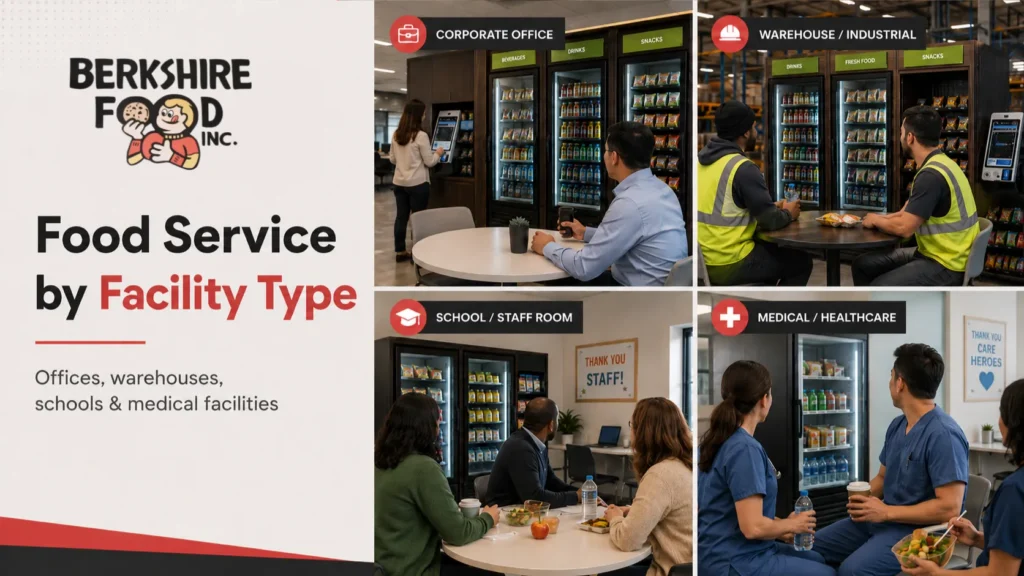
Corporate Offices
Corporate offices often use the break room for several purposes. Employees may grab coffee in the morning, refill water bottles between meetings, eat lunch on-site, or use the space for informal conversations. Visitors, clients, vendors, and interview candidates may also experience the break room or coffee area. In this setting, workplace food service can support both employee satisfaction and company presentation. This is usually to create a clean, dependable, and convenient space that fits daily office routines without creating extra work for office managers, HR teams, or facilities staff.
Best-fit refreshment options for offices
For many offices, coffee is the foundation of the break room. Employees use it throughout the day, and meetings often depend on it. A managed office coffee service can help keep coffee equipment, cups, creamers, sweeteners, and supplies organized without requiring internal staff to manage every detail.
Offices may also benefit from filtered water, pantry snacks, and light food options depending on team size. A small office may only need coffee and water, while a larger corporate workplace may need a fuller break room program with snacks, beverages, and fresh food.
Warehouses and Distribution Centers
Warehouses and distribution centers need food service solutions that are practical, fast, and reliable. Employees may work early mornings, late evenings, overnight shifts, or physically active roles. Breaks are often short, and nearby restaurants or stores may not be convenient during shift changes. In these environments, food and beverage access should be easy to reach and simple to use. The refreshment area should support cold drinks, water, quick snacks, and filling options without slowing employees down or creating operational problems.
Refreshment needs for shift-based teams
Vending is often a strong fit for warehouses because it provides compact access to snacks and drinks in high-traffic employee areas. Modern office vending machines can support shift teams with cold beverages, snacks, water, and better-for-you options where a larger food setup may not fit.
Placement matters in warehouses. Machines or refreshment stations should be close to employee break areas, not hidden in low-traffic corners. If employees have only a few minutes, they should not have to walk across the facility to get a drink or snack.
Manufacturing Facilities
Manufacturing facilities need refreshment programs that are dependable, durable, and easy to maintain. Employees may work physically demanding jobs, follow strict break schedules, and rely on quick access to water, snacks, and beverages during the day. In this type of workplace, the break room should be planned around access and consistency. This is not to create an overly polished food area. The purpose is to support employees with practical options that are available when they need them and simple enough to use during limited break times.
What works best in manufacturing environments
Manufacturing teams often benefit from hydration stations, vending machines, and grab-and-go food options. Water access is especially important because employees may be active throughout the day. Cold beverages and filling snacks can also support employees during long shifts or short breaks.
A manufacturing refreshment plan should consider traffic flow, safety, and schedule. If employees work across multiple shifts, the food service setup should not depend only on standard business hours. Products should be available early, late, or whenever employees are scheduled to work.
Schools and Educational Workplaces
Schools and educational workplaces usually need refreshment services for staff rooms, faculty lounges, administrative offices, and approved employee areas. Teachers, administrators, and support staff often have short breaks and busy schedules. They may not have time to leave campus for coffee, water, or snacks during the school day. A good food service setup in this environment should be organized, appropriate, easy to maintain, and focused on staff convenience. The goal is not to create a large foodservice operation, but to support employees with reliable daily refreshment access.
Staff room refreshment planning
School staff rooms often work well with coffee, water, and simple snack options. A practical coffee setup can support teachers and staff in the morning, while water and light snacks can help during short breaks throughout the day. In some cases, vending may be useful in approved areas where purchase-based snack and beverage access makes sense.
The product mix should be simple and clean. Staff need items that are easy to grab, easy to store, and easy to restock. Reliable service matters because school employees usually do not have time to manage break room supplies during the day.
Medical Facilities
Medical facilities have unique refreshment needs because staff may work long shifts, irregular schedules, and high-pressure days. Employees may need coffee early in the morning, water throughout the day, quick snacks between responsibilities, or simple food options during extended shifts. Some refreshment areas may also serve visitors or administrative teams depending on the facility. In this setting, consistency matters. A food service program should be dependable, clean, easy to access, and planned around the realities of healthcare work.
Supporting long shifts and busy schedules
Hydration is especially important in medical workplaces because staff may be moving throughout the day and may not always have time for long breaks. A dependable office water service can help provide filtered, chilled, sparkling, or flavored water options depending on the facility’s needs.
Medical facilities may also benefit from coffee, vending, and fresh food options. The right mix depends on employee count, available space, hours of operation, and whether the refreshment area supports only staff or also visitors. A managed service helps keep supplies consistent without adding more work to internal teams.
Small Offices and Professional Workplaces
Small offices sometimes assume they do not need a formal food service program, but even a simple setup can improve the workday. A small team may not need a micro market or several vending machines, but employees still appreciate dependable coffee, clean water, and a few useful snack options. The key is keeping the program realistic. A smaller workplace should avoid overbuilding the break room and instead focus on the items employees actually use every day.
Start simple and build gradually
For small offices, a good starting point may be coffee service, filtered water, and a small pantry-style snack area. If employees regularly leave the office for drinks or snacks, the program can be expanded over time.
An employer-funded pantry setup can be useful when a company wants to offer snacks and beverages as a small workplace perk. Berkshire Food’s office pantry service can support businesses that want a simple, organized, and employee-friendly snack and beverage program without requiring internal staff to manage every supply run.
Large Offices and Multi-Shift Workplaces
Large offices and multi-shift workplaces often need more than one refreshment solution. A single coffee station or vending machine may not be enough when hundreds of employees use the space throughout the day. These workplaces may need multiple access points, fresh food options, cold beverages, water stations, and service schedules that match employee traffic. The focus is to prevent long lines, empty machines, missing supplies, and limited food access during peak times.
When a micro market becomes the better fit
A micro market can be a strong option when a workplace needs more variety than vending or pantry service can provide. It creates a self-service market with open shelves, coolers, fresh food, beverages, snacks, and checkout technology. This can be helpful for locations where employees need lunch options, fresh meals, and grab-and-go food without leaving the building.
For larger teams, Berkshire Food’s office micro markets can support a more complete break room experience. Micro markets are especially useful when a facility has enough daily traffic to support fresh food and a broader product selection.
Comparing Food Service Options by Facility Type
Choosing the right food service solution becomes easier when employers compare needs by facility type. A workplace does not need every available service. It needs the services that fit its employees, schedule, space, and budget. Coffee may be essential in offices, while vending may be more practical for warehouses. Water service may be a priority in active environments, while pantry service may support culture in professional workplaces. Fresh food may matter most where employees cannot easily leave for lunch.
Simple facility-based comparison
| Facility Type | Common Needs | Best-Fit Services |
|---|---|---|
| Corporate office | Coffee, water, snacks, meeting support | Coffee service, water service, pantry |
| Warehouse | Cold drinks, snacks, shift access | Vending, water service |
| Manufacturing plant | Hydration, quick snacks, reliable access | Water service, vending, grab-and-go options |
| School | Staff coffee, water, light snacks | Coffee, water, pantry or vending |
| Medical facility | Long-shift support, hydration, quick food | Water, coffee, vending, fresh food |
| Large workplace | Fresh food, multiple access points, variety | Micro market, vending, coffee, water |
This comparison should be used as a planning guide, not a fixed rule. The right solution depends on how employees actually use the workplace. A small office with heavy client traffic may need a stronger coffee program. A school with a large staff may need more than a basic coffee station. A warehouse with multiple shifts may need vending in more than one area.
How to Choose the Right Workplace Food Service Provider
The right provider should help the business choose services based on workplace needs, not push the same package for every facility. Food service depends on planning, stocking, maintenance, product adjustments, and communication. A provider should understand employee count, facility layout, break schedules, product preferences, and local service expectations. This is especially important for workplaces with multiple shifts, high traffic, or different employee groups using the same break room.
Questions employers should ask first
Before choosing a provider, employers should think about the main problems they want to solve. Are employees leaving the building for coffee? Are vending machines empty too often? Is water access limited? Are break rooms underused? Do employees need fresh food because restaurants are not nearby? These questions help identify the right starting point.
A strong provider should also be able to adjust the program over time. Product demand changes, employee preferences shift, and workplaces grow. The food service plan should be flexible enough to keep up.
Why Local Service Matters in Connecticut
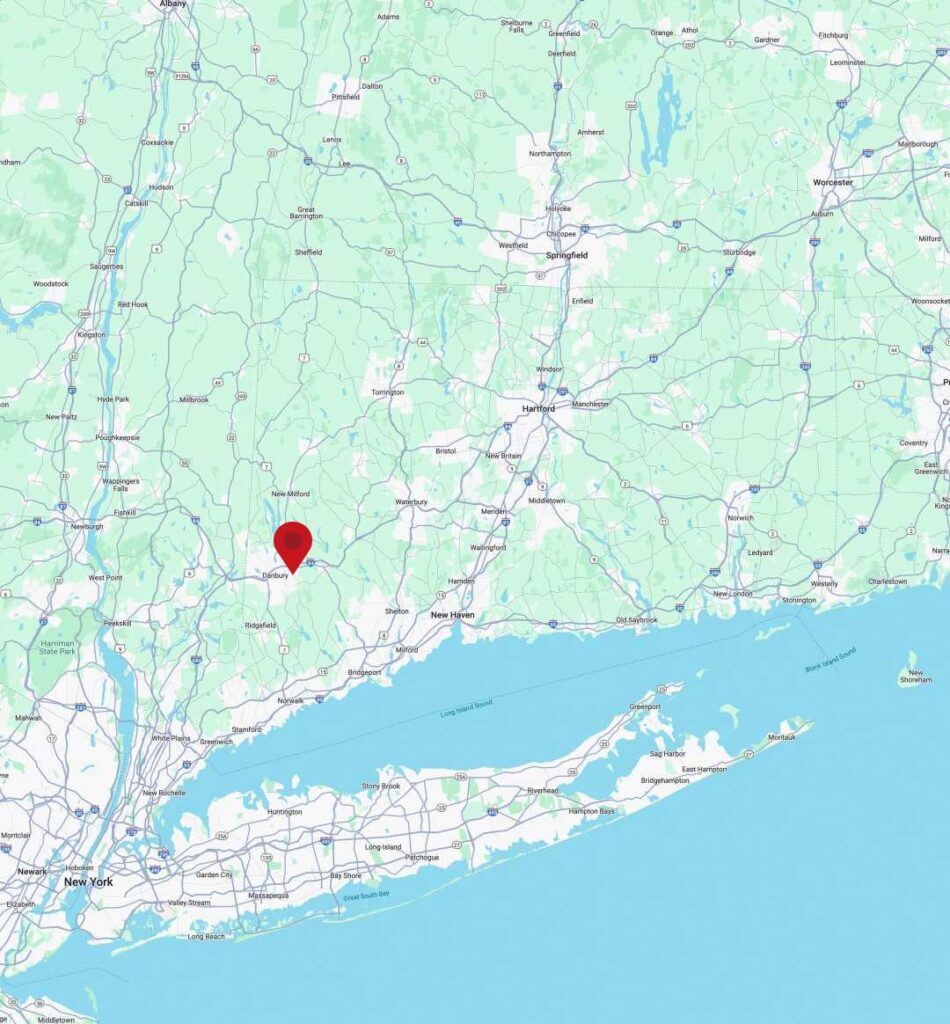
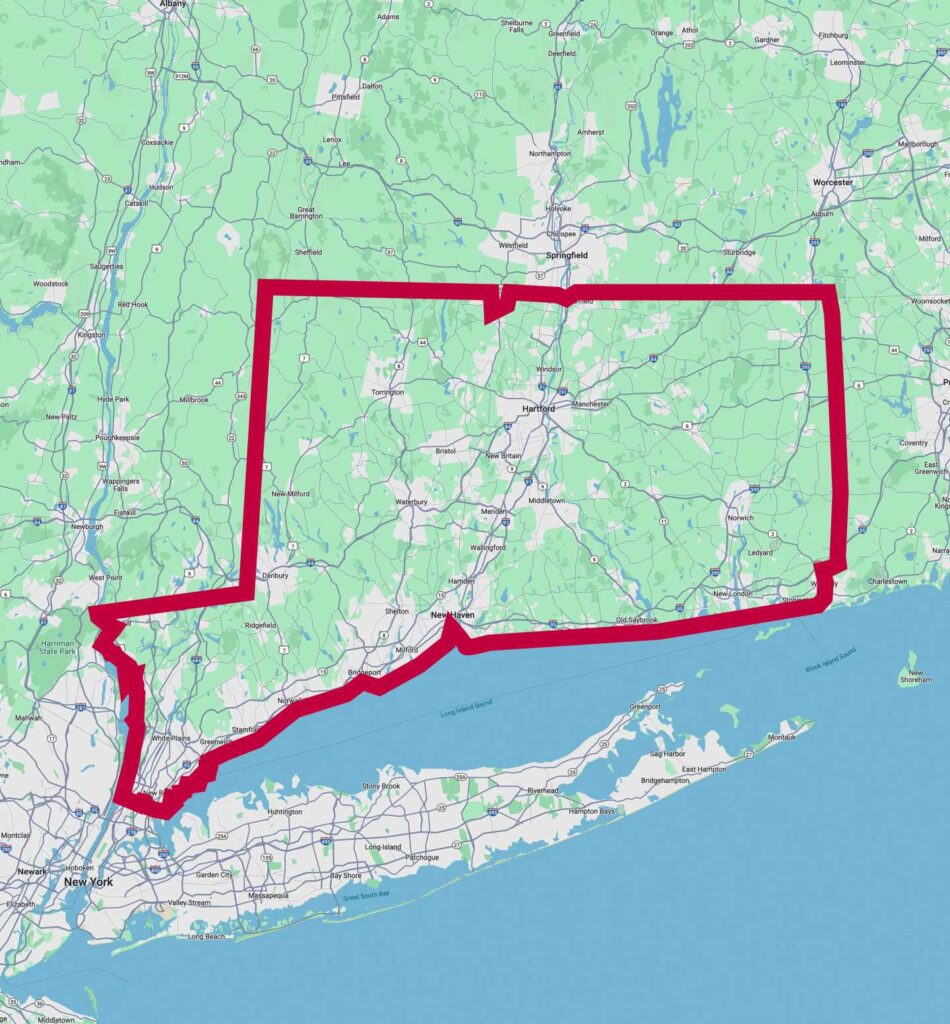
Workplace food service is ongoing. Products need to be stocked, equipment may need service, coffee supplies can run out, water systems require support, and employee preferences can change over time. For Connecticut and Upper Westchester County workplaces, local service helps make the program more dependable. A local provider understands regional workplaces, routes, service expectations, and the differences between offices, warehouses, schools, medical facilities, and manufacturing environments. This matters because food service is not only about installing equipment. It is about keeping the break room useful week after week.
Berkshire Food’s workplace refreshment experience
Berkshire Food is a family-owned and operated refreshment provider serving businesses across Connecticut and Upper Westchester County, NY. Since 1964, the company has helped local workplaces improve break rooms with coffee, water, vending, pantry service, micro markets, and related refreshment solutions.
That experience matters because each workplace needs a different approach. A corporate office may need a polished coffee and pantry setup. A warehouse may need practical vending and water access. A medical facility may need dependable refreshments for long shifts. Berkshire Food helps match the solution to the workplace.
Final Thoughts: Match the Service to the Workplace
The best workplace food service solution is the one that fits the facility. Offices, warehouses, schools, medical facilities, manufacturing plants, small businesses, and large workplaces all have different needs. A useful break room should support the real workday, not just look good on paper. That means choosing services based on employee schedules, break length, product demand, space, and service expectations.
Some workplaces only need coffee and water. Others need vending, pantry snacks, fresh food, or a full micro market. The strongest programs are planned carefully, stocked consistently, and adjusted as employee needs change.
Ready to choose the right refreshment setup for your workplace? Contact Berkshire Food to start planning a food service solution for your Connecticut business.
Frequently Asked Questions
Workplace food service includes coffee, water, snacks, beverages, vending, pantry items, fresh food, and micro market solutions provided inside a workplace or employee break room.
Corporate offices often benefit from coffee service, water service, pantry snacks, and light food options that support employees, meetings, visitors, and daily office routines.
Warehouses often need vending machines, cold beverages, water access, and quick snacks that support shift workers and short break times.
Yes. Micro markets can be a strong fit for larger workplaces that need fresh food, beverages, snacks, and a self-service market experience inside the break room.
Schools may benefit from coffee, water, light snacks, and simple refreshment options for staff rooms, faculty lounges, and approved employee areas.
Medical facilities often benefit from coffee, water, vending, quick snacks, and fresh food options that support long shifts and busy staff schedules.
Yes. Small offices can start with simple services such as coffee, water, and pantry snacks, then expand if employee needs grow.
Yes. Berkshire Food provides workplace refreshment services for businesses across Connecticut and Upper Westchester County, NY.