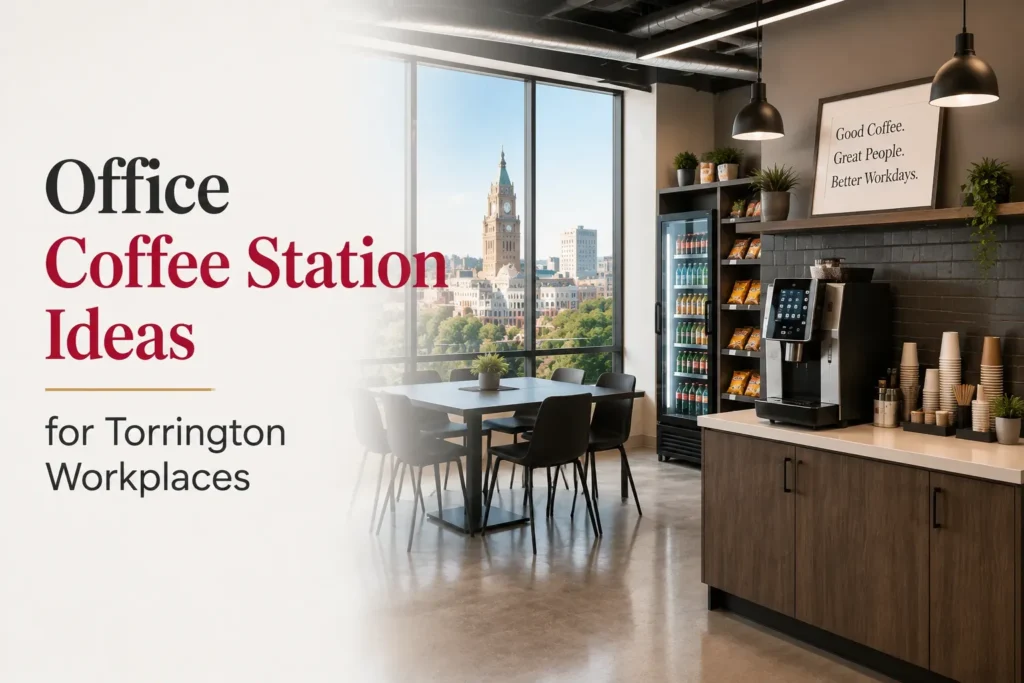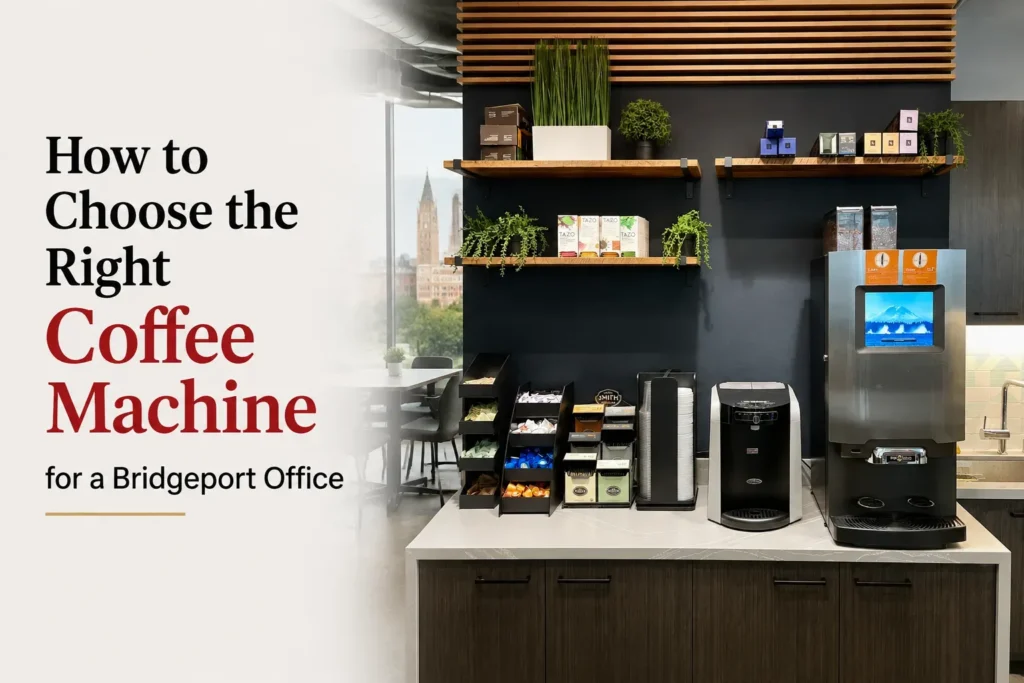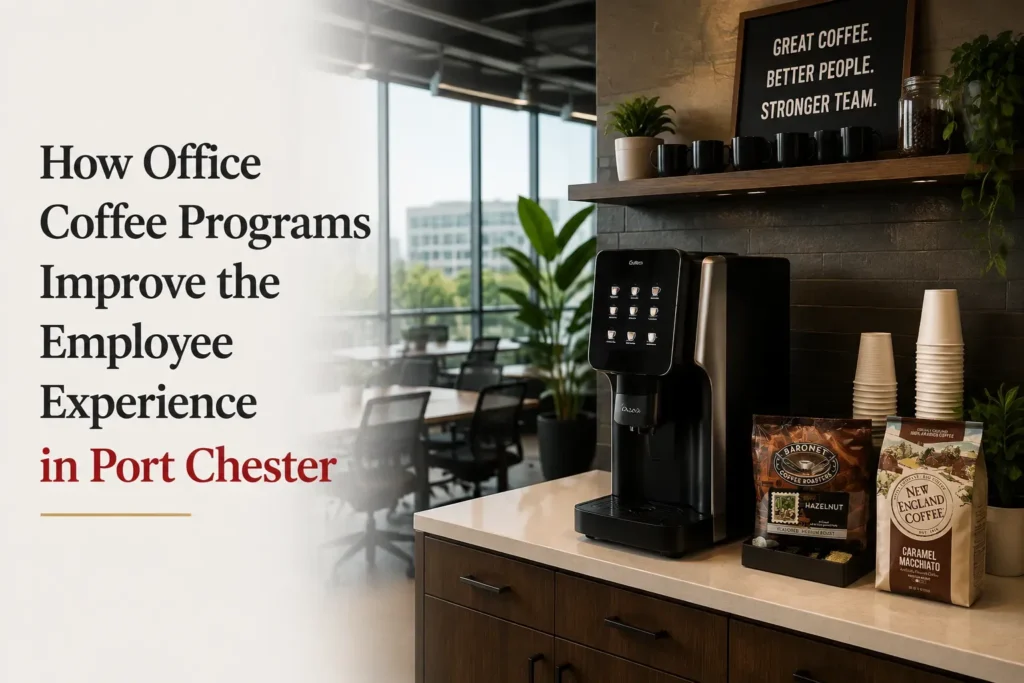

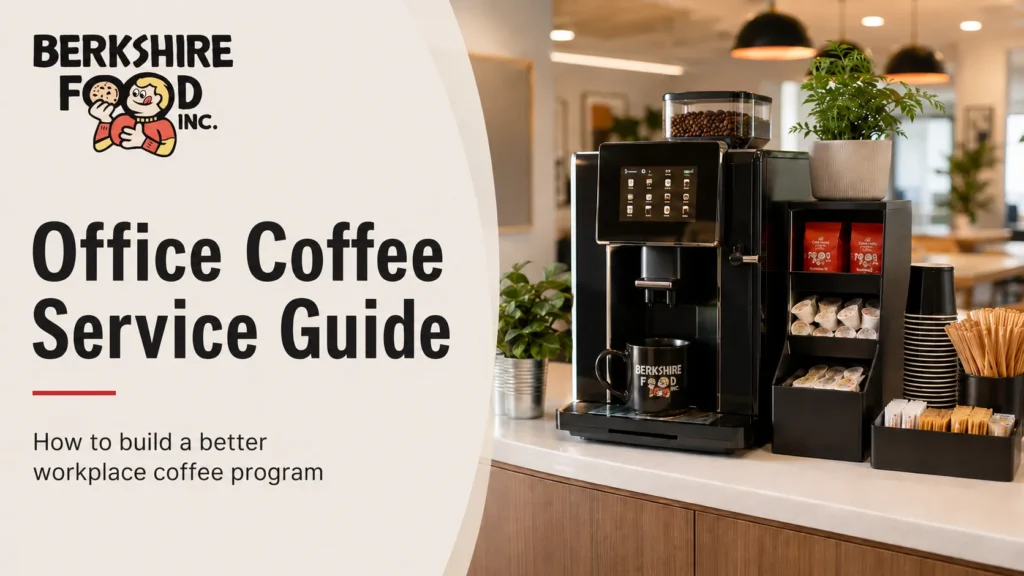
Coffee is part of the daily routine in many workplaces. Employees drink it before meetings, during morning routines, on afternoon breaks, and while working through long schedules. For many companies, coffee is not just another office supply. It is part of the employee experience.
A well-planned workplace coffee program can make the break room more useful, reduce off-site coffee runs, support meetings, and give employees a simple perk they use every day. But the best programs are not built by randomly buying coffee machines or ordering supplies when something runs out. They are planned around the people, space, schedule, and daily habits of the workplace.
This guide explains how office coffee service works, what to consider before choosing equipment, how delivery and supplies should be managed, and how Connecticut businesses can build a better coffee program for their teams.
What is an Office Coffee Service?
Office coffee service is a managed workplace coffee program that provides the equipment, coffee products, supplies, delivery, and service support needed to keep coffee available in an office or facility. Instead of expecting internal staff to handle coffee orders, machine issues, cups, creamers, sweeteners, and inventory, a coffee service provider helps manage the program. For businesses in Connecticut and Upper Westchester County, NY, this can make the break room more dependable and easier to maintain. A good program should fit your team’s size, taste preferences, schedule, and daily coffee usage.
What a managed coffee program usually includes
A workplace coffee program may include traditional brewers, single-cup systems, bean-to-cup machines, premium coffee blends, tea, hot chocolate, cups, lids, stirrers, napkins, creamers, sweeteners, and related break room supplies. It can also include delivery, restocking, equipment support, and program adjustments as your team’s needs change.
The main benefit is consistency. Employees know coffee will be available when they need it, and office managers do not have to keep solving the same coffee problems every week.
For businesses that want direct service support, Berkshire Food’s office coffee service is designed to help workplaces create a reliable coffee station with the right equipment, products, and local support.
Why Office Coffee Matters in the Workplace
A workplace coffee station may seem simple, but it often affects the daily employee experience more than employers realize. When coffee is easy to access, employees can start the day more smoothly, stay on-site during breaks, and feel more comfortable during busy schedules. When coffee is missing, poorly stocked, or inconsistent, employees notice quickly. They may leave the office for coffee, spend more time away from their work area, or become frustrated with the break room. A dependable coffee program helps remove those small daily problems and creates a better rhythm for the workplace.
Coffee supports convenience and routine
Employees often build coffee into their daily routine. Some grab a cup as soon as they arrive. Others use coffee breaks to reset between meetings or tasks. In many workplaces, coffee is also part of hospitality for guests, clients, vendors, and interview candidates.
A good coffee station supports these everyday moments without creating extra work for the company. It gives employees a familiar place to pause, recharge, and return to the day without leaving the building.
Coffee can improve the break room experience
The break room is one of the few shared spaces employees use regularly. If the coffee area is messy, empty, or outdated, it can make the entire break room feel neglected. If it is clean, stocked, and easy to use, it makes the space feel more intentional.
That does not mean every office needs a luxury coffee bar. It means the coffee program should feel reliable, organized, and appropriate for the team using it.
Choosing the Right Office Coffee Setup
The right office coffee setup depends on how your employees drink coffee, how many people use the break room, and what kind of experience your company wants to provide. A small office may only need a simple brewer and basic supplies, while a larger workplace may need multiple machines, premium blends, or a coffee station that supports different departments and shifts. The best place to start is understanding how your employees actually use the break room. How much coffee is used each day? When do employees drink it? Do they want variety? Do meetings require coffee service? These questions shape the right solution.
Traditional brewed coffee
Traditional brewed coffee is a practical option for offices that need coffee available for groups. It works well in shared break rooms, staff areas, meeting spaces, and workplaces where employees drink coffee throughout the day.
This setup is familiar, easy to understand, and suitable for teams that prefer classic coffee without too many individual drink options. It can also be useful for meetings because it allows larger amounts of coffee to be brewed and served at once.
Single-cup coffee systems
Single-cup coffee systems are useful when employees want more variety. One person may prefer dark roast, another may want decaf, and another may want tea or hot chocolate. A single-cup system allows employees to make individual drinks instead of relying on one shared pot.
This can be especially helpful in smaller offices or workplaces where employees drink coffee at different times of day. It can also reduce wasted coffee because each drink is made when needed.
Bean-to-cup machines
Bean-to-cup coffee machines create a more premium coffee experience. These machines grind coffee beans and brew drinks on demand, giving employees fresher coffee with less manual preparation.
This option can be a good fit for corporate offices, client-facing workplaces, executive areas, and companies that want the break room to feel more modern. It is often chosen by businesses that view coffee as part of their employee satisfaction strategy, not just a basic supply.
Best Coffee Machines for Office Use
When companies search for the best coffee machines for office use, they often focus only on the machine itself. But the best coffee machine is not always the most expensive or advanced option. It is the machine that fits your workplace. A high-traffic office may need a durable brewer that can handle steady use. A smaller team may prefer a single-cup system. A workplace that hosts clients may want something more polished. Before choosing equipment, it is important to think about daily usage, counter space, service needs, maintenance, and the kind of coffee experience employees expect.
Office coffee machine comparison
| Coffee Machine Type | Best For | Main Advantage |
| Traditional brewer | Shared break rooms and group coffee use | Simple, familiar, and practical |
| Single-cup system | Teams with different drink preferences | Variety and individual servings |
| Bean-to-cup machine | Premium workplace coffee experience | Fresh coffee and café-style convenience |
| Thermal brewer | Meetings and steady coffee demand | Keeps coffee available longer |
| Full coffee station | Companies wanting a complete perk | Coffee, supplies, and drink options together |
A provider can help match the equipment to your workplace instead of forcing one standard setup. This matters because a machine that works well in a 20-person office may not be the best fit for a warehouse, medical facility, or corporate workplace with heavy break room traffic.
Office Coffee Delivery and Supplies
Office coffee delivery should do more than drop off coffee. A strong service should help keep the whole coffee area ready for daily use. That includes coffee products, cups, creamers, sweeteners, lids, stirrers, napkins, tea, hot chocolate, and other related supplies depending on the program. When supplies are not managed well, employees quickly run into problems. Coffee may be available, but there are no cups. The machine may work, but creamer is missing. A managed service helps prevent these small issues from becoming regular complaints.
Why supply management matters
Many offices underestimate how much time goes into managing coffee supplies. Someone has to notice what is low, place the order, receive the supplies, organize them, and deal with complaints when something runs out. That responsibility often falls on office managers, HR staff, facilities teams, or whoever happens to notice the issue first.
A managed coffee delivery program helps reduce that burden. It creates a more predictable process for keeping coffee and supplies available, which makes the break room easier to manage.
A complete office coffee program may support:
- Coffee products and brewing supplies
- Cups, lids, creamers, sweeteners, and stirrers
- Tea, hot chocolate, and related beverage options
The right mix of products should be based on actual employee usage. If employees use more creamer than expected or prefer a certain blend, the program should be adjusted over time.
Commercial Coffee Service vs. Buying Coffee Yourself
Some companies manage coffee on their own, especially when the team is small. That can work for a while, but it often becomes harder as the business grows. Internal staff must handle shopping, ordering, storage, restocking, equipment issues, and employee complaints. A commercial coffee service gives companies a more organized way to handle the same need. It can provide equipment recommendations, coffee delivery, supplies, and support in one program. For many workplaces, the biggest benefit is not only better coffee. It is fewer internal tasks and a more reliable break room experience.
| Category | Buying Coffee Yourself | Commercial Coffee Service |
| Inventory | Managed by internal staff | Managed or supported by provider |
| Equipment | Purchased and maintained internally | Provider helps recommend and support equipment |
| Product variety | Limited by store availability | Customizable based on workplace needs |
| Restocking | Manual and easy to forget | More organized and service-based |
| Staff workload | Higher | Lower |
| Scalability | Harder as the team grows | Easier to adjust over time |
The right choice depends on the size and needs of the workplace. For a very small office, buying coffee may seem simple. But for growing businesses, multi-shift facilities, or companies that want a more polished break room, managed service is usually easier to sustain.
How to Build a Better Workplace Coffee Program
A better workplace coffee program starts with planning. It should not be based only on what one person likes or what supplies are easiest to buy. The program should reflect how employees actually use the break room, what drinks they prefer, how many people need coffee each day, and how often supplies should be restocked. It should also consider equipment reliability, available space, storage, and maintenance. When these details are handled early, the coffee station becomes easier to use, easier to manage, and more valuable to employees.
Start with team size and usage
The first step is understanding how much coffee your workplace uses. A 15-person office has different needs than a 200-person facility. A workplace with early shifts may need coffee ready before standard office hours. A meeting-heavy company may need equipment that can serve groups quickly.
Usage patterns help determine machine type, coffee volume, delivery frequency, and supply quantities. This is where many businesses make mistakes. They choose equipment before understanding how employees will actually use it.
Understand employee preferences
A coffee program should reflect employee preferences when possible. Some teams prefer classic medium roast coffee. Others want dark roast, decaf, flavored options, tea, hot chocolate, or non-dairy creamers. Even a simple employee survey can help shape the right product mix.
The goal is not to satisfy every possible request but to build a coffee station that feels useful to most employees and can be adjusted as preferences become clearer.
Plan the coffee area
A coffee station should be easy to use and easy to keep organized. Machines need counter space, supplies need storage, and employees need room to prepare drinks without crowding the break room. If the area is too small, messy, or poorly arranged, even good coffee can feel inconvenient.
A clean setup with clearly placed cups, creamers, sweeteners, napkins, and waste bins can make a big difference in daily use.
Coffee Service for Different Workplace Types
No two workplaces use coffee the same way. A corporate office may need coffee for employees, clients, and meetings. A warehouse may need coffee for shift workers starting early in the morning. A medical facility may need dependable coffee access during long days and irregular schedules. Schools, manufacturing plants, distribution centers, and small offices all have different usage patterns. That is why office coffee service should be flexible. The provider should understand the type of workplace, the pace of the day, and the people using the coffee station before recommending a program.
Corporate offices
Corporate offices often need a polished coffee setup that supports employees, guests, meetings, and shared workspaces. Depending on the company culture, this may mean premium coffee options, a single-cup system, or a more complete beverage station.
A reliable coffee program can also support hiring and retention efforts because it contributes to a more thoughtful workplace environment.
Warehouses and manufacturing facilities
Warehouses and manufacturing plants often need practical, durable coffee solutions. Employees may work early shifts, long days, or rotating schedules. In these settings, convenience and reliability matter more than unnecessary complexity.
Coffee service can also pair well with snacks, cold beverages, or vending in high-traffic employee areas.
Medical facilities and schools
Medical staff may need coffee during long shifts, and school staff often rely on coffee in staff rooms, faculty areas, or administrative offices. These environments benefit from coffee programs that are easy to use, dependable, and simple to maintain.
For these facilities, a provider should consider access, traffic flow, restocking needs, and how the coffee station fits into the larger workplace environment.
Pairing Coffee with Other Break Room Services
Coffee is often the starting point for a better break room, but it does not have to stand alone. Many workplaces eventually realize that employees also need water, snacks, fresh food, or pantry supplies. A coffee station paired with hydration and snack options can create a more complete refreshment experience. The key is relevance. A small office may only need coffee and water. A larger workplace may benefit from coffee, pantry items, and a micro market. The right mix depends on employee count, facility type, schedule, and the company’s goals for the break room.
For workplaces that want better beverage options, office water service can support hydration alongside coffee. This is especially useful in offices, warehouses, medical facilities, and manufacturing settings where employees need easy access to drinking water throughout the day.
For companies that want to provide snacks, creamers, and employee perks in an open break room setup, office pantry service may be a natural fit. Coffee and pantry service work well together because both support daily convenience and employee satisfaction.
Larger workplaces may also consider office micro markets when they need fresh food, beverages, and self-service purchasing in addition to coffee.
What to Look for in a Connecticut Office Coffee Provider
Choosing a coffee provider should not be based only on product lists. The provider should understand workplace needs, service expectations, equipment options, and local support. For Connecticut businesses, local service matters because break room programs need ongoing attention. Machines may need support, supplies may need adjustment, and product preferences may change. A good provider should be responsive, practical, and able to recommend solutions based on the workplace rather than selling the same package to every company. The right partner helps make coffee easier for both employees and internal teams.
Signs of a strong provider
A dependable office coffee provider should be able to explain the differences between coffee systems, recommend equipment based on usage, manage supplies, and adjust the program as needed. They should also understand how coffee fits into the larger break room experience.
Look for a provider that offers clear communication, regular service support, product flexibility, equipment guidance, and experience with different workplace settings. Local experience is especially helpful for companies that operate across offices, warehouses, schools, medical facilities, or manufacturing sites.
Why Choose Berkshire Food for Office Coffee Service?
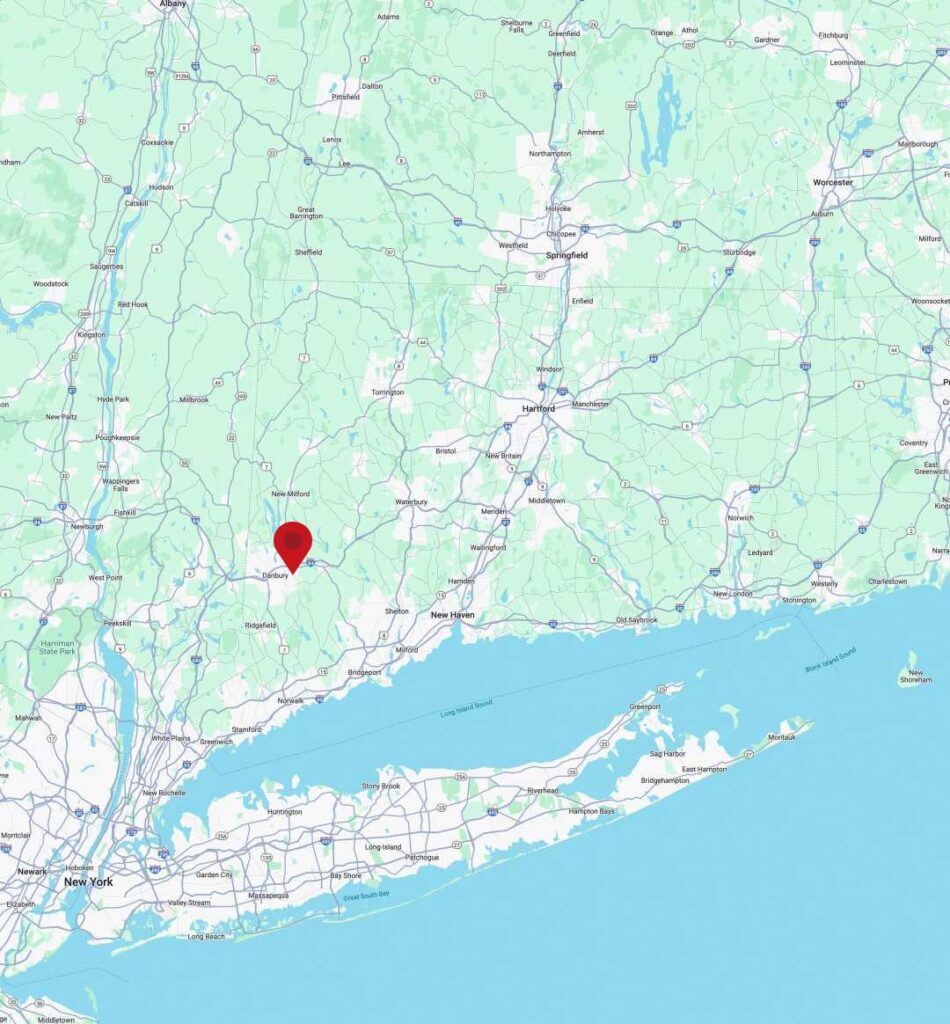
Berkshire Food supports workplaces across Connecticut and Upper Westchester County, NY with office coffee service and related refreshment solutions. As a family-owned and operated company since 1964, Berkshire Food understands that workplace refreshment is not only about products. It is about service, reliability, and creating a better daily experience for employees. Some businesses need a simple coffee station. Others need a more complete coffee program with supplies, delivery, water service, pantry options, or micro markets. Berkshire Food helps match the program to the workplace instead of treating every location the same.
Local service with broader break room support
A strong coffee program works best when it is connected to the full break room experience. Berkshire Food can help with coffee equipment recommendations, product selection, delivery support, supplies, and ongoing service. Because the company also provides other refreshment services, businesses can build a more complete program over time if their needs expand.
That flexibility is useful for workplaces that are growing, improving employee perks, managing multiple shifts, or trying to reduce the daily burden on HR, office management, and facilities teams.
Common Signs Your Coffee Setup Needs an Upgrade
Many workplaces wait too long to improve their coffee program because coffee feels like a small issue. But small issues can become daily frustrations when they happen often. If employees regularly complain about the coffee, leave the building to buy drinks, or find the station empty, the current setup may no longer fit the workplace. Outdated machines, missing supplies, limited options, and unclear responsibility for restocking are all signs that a more managed approach could help. An upgrade does not always mean a larger or more expensive program. Sometimes it means choosing a better-fitting setup.
A workplace may be ready for an upgrade when coffee runs out frequently, supplies are missing, the machine is unreliable, employees want more variety, or internal staff are spending too much time managing coffee problems. These signs usually mean the program is not aligned with current usage.
A better system can improve consistency without making the break room complicated. The purpose is to make coffee one less thing your team has to worry about.
Final Thoughts: Build a Coffee Program Your Team Will Use
A well-built office coffee service can improve the daily rhythm of the workplace. It gives employees convenient access to coffee, supports meetings, reduces off-site trips, and makes the break room feel more complete. The best program is not necessarily the largest one. It is the one that fits your team, space, schedule, and service needs. For Connecticut workplaces, choosing a local provider can also make the experience easier because coffee service depends on dependable support, not just products. With the right setup, coffee becomes a simple but valuable part of the employee experience.
Ready to improve your workplace coffee program? Contact Berkshire Food to start building a better break room for your team.