
How much does office coffee service cost in Connecticut? There is no single monthly price that applies to every workplace. Office coffee service cost depends on the number of employees using the program, how much coffee they drink, the brewing equipment selected, beverage and supply choices, service requirements, and how often products need replenishment.
A small office that uses a traditional brewer and a limited coffee selection will have different budget requirements from a corporate workplace with single-cup equipment, specialty beverages, and several coffee stations. Manufacturing facilities, healthcare offices, and multi-shift workplaces may have additional considerations because their daily usage patterns can be less predictable.
For Connecticut businesses, understanding these factors before requesting a quote makes it easier to compare service options and choose a practical budget. This guide explains the major cost components, offers a framework for estimating monthly consumption, and identifies the questions employers should ask before committing to a workplace coffee program.
What Determines Office Coffee Service Cost?
The cost of a workplace coffee program is usually influenced by several connected decisions. Coffee products are an obvious expense, but the brewing system, supporting supplies, service arrangement, and employee demand also shape the overall budget.
Businesses should evaluate the full program rather than comparing coffee prices alone. A lower product price may not represent the best overall value if the arrangement creates additional equipment expenses, employee management responsibilities, or avoidable product waste.
| Cost Factor | What Influences the Budget | What Businesses Should Review |
| Employee usage | Number of coffee drinkers and cups consumed | Daily and monthly beverage demand |
| Coffee equipment | Traditional, single-cup, or bean-to-cup systems | Equipment costs and agreement terms |
| Coffee products | Roast, brand, format, and product selection | Product pricing and expected consumption |
| Serving supplies | Cups, lids, creamers, sweeteners, and stirrers | Consumables included in the quote |
| Delivery and restocking | Consumption, storage, and delivery arrangements | Service frequency and associated charges |
| Maintenance | Cleaning, repairs, filters, and equipment support | Responsibilities and included services |
| Workplace size | Number of stations, locations, and shifts | Whether additional equipment is necessary |
Understanding these components provides a stronger starting point for budget planning than choosing a coffee machine or product based only on its advertised price.
How Employee Count and Coffee Consumption Affect Your Budget
Employee count is an important planning factor, but it does not automatically tell a business how much coffee to order. Two workplaces with the same number of employees may have very different consumption patterns.
A professional office with hybrid attendance may have fewer people onsite during certain weekdays. A manufacturing facility with several shifts may have employees using the coffee station throughout the day and overnight. A client-facing business may also need additional coffee for meetings, visitors, or shared hospitality areas.
Estimate How Many Employees Actually Drink Coffee
Begin with the number of employees typically working onsite, then estimate how many regularly use the coffee station. It is useful to consider employees who prefer tea or other beverages separately, because not everyone will consume the same products.
Workplace managers can gather this information through a brief employee survey, existing supply orders, or a review of how frequently the current coffee station needs replenishment.
The goal is to develop a realistic usage estimate rather than assume that every employee drinks multiple cups each day.
Account for Daily and Peak Demand
Coffee consumption is not always evenly distributed throughout the day. Morning arrivals, scheduled breaks, meetings, and shift changes can create periods of higher demand.
An office that serves most coffee during the morning may prefer a different brewing arrangement from a facility where employees prepare individual drinks throughout several shifts. The timing of consumption can affect equipment capacity, product waste, and the number of coffee stations required.
Businesses should review both typical daily use and the busiest periods before finalizing equipment or supply quantities.
How Coffee Equipment Choices Influence Program Pricing
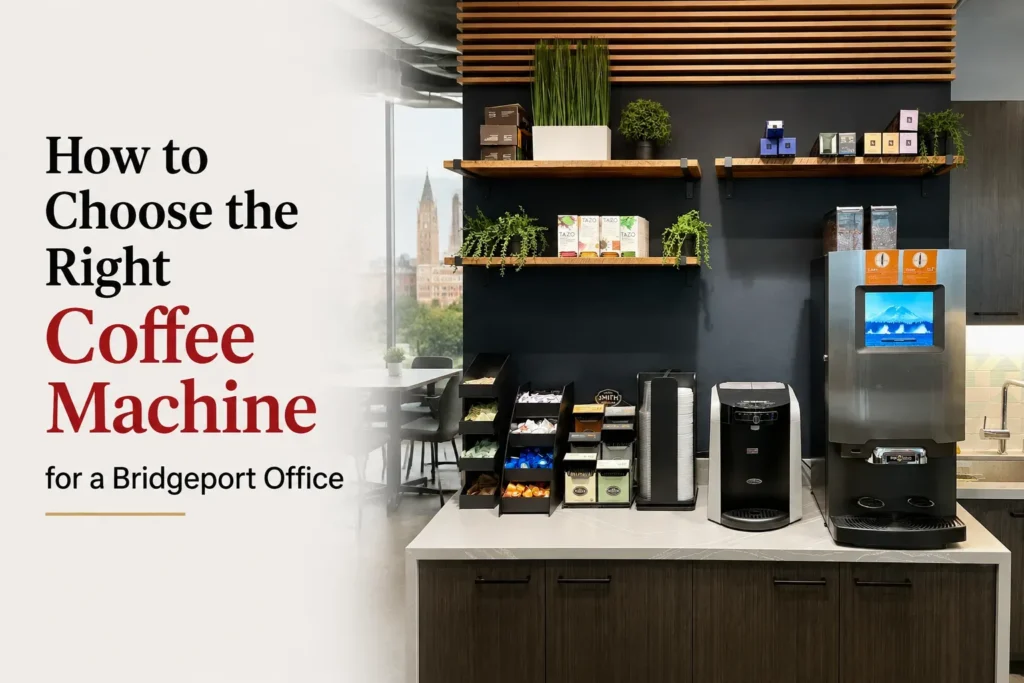
The brewing equipment selected can make a meaningful difference in office coffee service pricing. Different systems use different product formats and may have different acquisition, maintenance, cleaning, and operating requirements.
Berkshire Food supports workplace coffee equipment options, including traditional brewers, single-cup systems, and bean-to-cup machines. Businesses evaluating office coffee service in Connecticut can discuss equipment and product combinations suited to their workplace requirements.
Traditional Coffee Brewers
Traditional brewers are familiar options for shared workplace coffee stations. They prepare coffee in larger batches, making them useful for offices where several people enjoy similar coffee varieties or need coffee during meetings.
Budget considerations include the brewer arrangement, coffee grounds or portion packs, filters where required, cleaning supplies, and the possibility of brewed coffee going unused.
Traditional brewing can be practical for workplaces with consistent group demand. However, businesses should review actual usage rather than assume that batch brewing will always be the lowest-cost option.
Single-Cup Coffee Systems
Single-cup machines allow employees to prepare individual beverages instead of relying on a shared pot. They can be useful when teams prefer different roasts, decaffeinated coffee, or individual beverage choices.
Because each serving uses a separate portion, businesses should evaluate product cost per serving along with equipment and supply requirements. The convenience of preparing coffee on demand may help reduce leftover brewed coffee, but actual savings depend on consumption and product pricing.
For smaller workplaces or offices with varied preferences, the flexibility of single-cup equipment may justify a different spending pattern from traditional brewing.
Bean-to-Cup Coffee Machines
Bean-to-cup systems grind coffee beans and prepare beverages on demand. They may appeal to offices that want a more personalized coffee experience, particularly in corporate, executive, or client-facing environments.
These machines can have different equipment, cleaning, filter, maintenance, and servicing requirements from simpler brewing systems. Businesses should therefore compare the complete service arrangement instead of focusing only on the experience offered by the machine.
A premium brewing setup may be appropriate for some workplaces, but the decision should reflect employee demand, available space, and the company’s refreshment budget.
Coffee Brands and Beverage Selection: How Much Variety Do You Need?
Coffee selection affects program cost because different products, formats, and beverage preferences create different purchasing requirements.
Connecticut businesses may want a familiar medium roast for everyday use, a darker roast for employees who prefer a stronger flavor, or decaffeinated options for people avoiding caffeine. Some workplaces also include flavored coffee or tea as part of a broader hot beverage program.
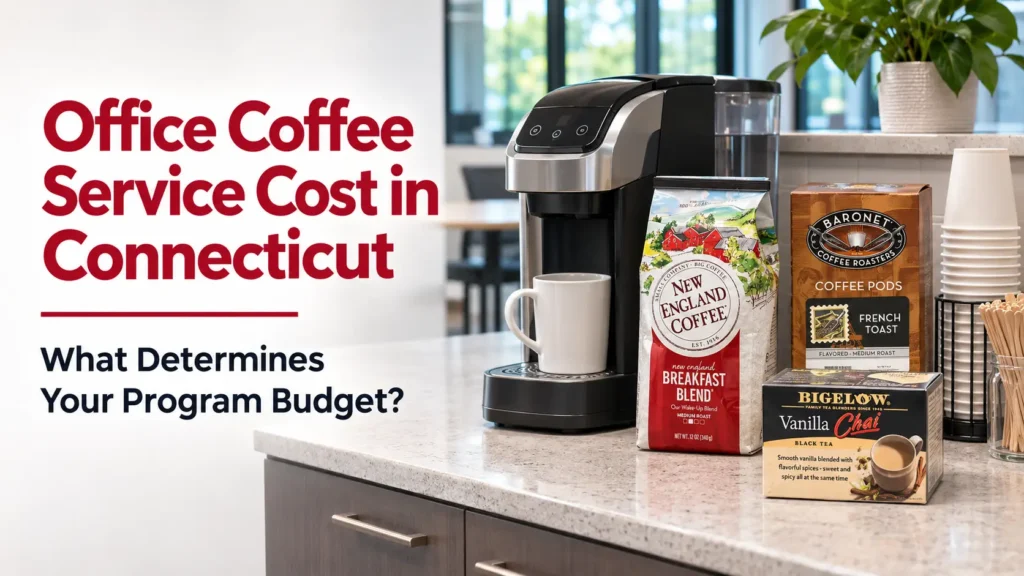
Berkshire Food offers coffee selections from brands including New England Coffee and Baronet Coffee, as well as tea options from Bigelow Tea. The exact products and formats available should be confirmed when planning a workplace coffee service arrangement.
A broader selection can improve employee choice, but variety should remain proportional to demand. Keeping large inventories of products that few employees use can increase spending and create storage or product-rotation challenges.
Balance Core Products With Specialty Choices
Start with a small group of frequently requested beverages. After employees begin using the program, review which selections move quickly and which remain on the shelf.
A workplace can then adjust its product mix without regularly purchasing items that receive limited interest. This approach is especially useful for companies with hybrid schedules, seasonal staffing changes, or varying meeting activity.
Don’t Overlook Cups, Creamers, and Other Coffee Supplies
Coffee products are only part of the ongoing expense. A complete coffee station may also require cups, lids, stirrers, napkins, sugar, sweeteners, creamers, and cleaning materials.
These items can become a significant part of the monthly supply order, particularly when a workplace uses disposable cups or provides multiple beverage stations. Even a modest difference in daily cup usage can influence how many supplies need to be purchased throughout the month.
Before comparing service quotes, ask which consumables are included and whether any items are billed separately.
Reusable vs. Disposable Serving Supplies
Reusable mugs may reduce the number of disposable cups purchased, but they create washing, storage, and employee-use considerations. Disposable products may be more convenient for visitors, large meetings, or facilities without suitable dishwashing arrangements.
Businesses should choose an approach that fits workplace operations rather than assuming one format is automatically less expensive in every situation.
For offices that already provide snacks and other employer-funded refreshments, an office pantry service may help organize broader break room purchasing alongside the coffee program.
Are Delivery, Restocking, and Maintenance Included?
A coffee service quote should explain more than the price of coffee. Businesses also need to understand how products will be delivered, how replenishment is handled, and who is responsible when equipment requires attention.
Some service arrangements may bundle certain activities into the overall program, while others may identify separate charges or conditions. What is included depends on the provider and agreement.
For Connecticut workplaces with multiple shifts or high daily demand, a clearly defined service process can be particularly valuable because supplies and equipment must remain usable across different schedules.
Questions About Delivery and Restocking
Businesses should confirm how replenishment is arranged, whether deliveries follow a schedule or actual consumption, and who monitors low inventory.
They should also ask how unexpected demand is handled, whether minimum order quantities apply, and how supply requirements are reviewed as employee habits change.
Questions About Equipment Support
Equipment maintenance deserves separate attention. Ask who performs cleaning, who handles repairs, whether filters or other consumable parts are included, and whether replacement equipment is available under the proposed agreement.
A lower initial quote can become less attractive if essential maintenance responsibilities or charges are not clearly explained.
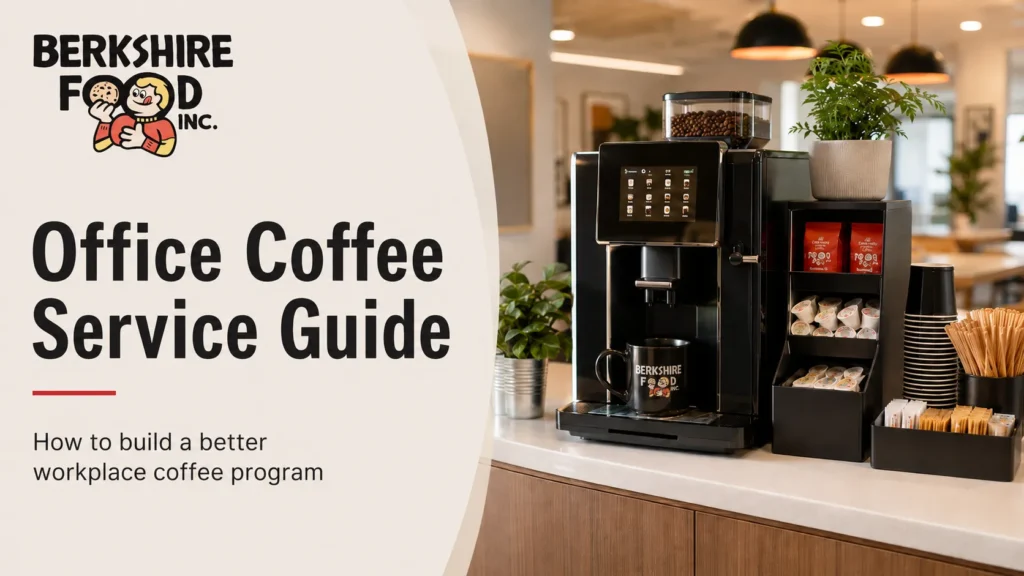
For a broader explanation of equipment, stocking, and program management, see Berkshire Food’s Office Coffee Service Guide.
How to Calculate a Monthly Office Coffee Budget
A useful budget begins with estimated consumption, followed by the costs of equipment, products, supplies, and ongoing service.
The following method helps office managers organize their assumptions before requesting a detailed proposal.
Step 1: Estimate Monthly Coffee Servings
Use a simple formula:
Average onsite employees × percentage who drink coffee × average cups per coffee drinker per day × working days = estimated monthly servings
This is a planning estimate. Employee attendance, meetings, visitors, and different shifts can increase or decrease actual consumption.
Step 2: Calculate Estimated Beverage Costs
Multiply the expected number of servings by the quoted cost per serving for the selected coffee format.
If multiple products have different prices, calculate them separately. For example, traditional brewed coffee, single-cup beverages, and specialty drinks may have different supply costs.
Step 3: Add Equipment and Service Expenses
Include any applicable equipment purchase, lease, rental, maintenance, filter, delivery, or service charges shown in the proposal.
Do not assume these items are included or excluded without reviewing the actual agreement.
Step 4: Include Supporting Supplies
Add estimated spending for cups, lids, creamers, sweeteners, stirrers, and other items the workplace expects to provide.
Where reusable serving supplies are used, consider their replacement and cleaning requirements.
Step 5: Review the Budget Against Actual Usage
After the program begins, compare estimated servings with actual consumption and supply purchases. This helps identify whether product quantities, equipment capacity, or ordering frequency should be adjusted.
Monthly Coffee Budget Worksheet
| Budget Item | How to Estimate It |
| Coffee and tea | Expected servings × relevant product cost per serving |
| Serving supplies | Expected cups and accessories × quoted unit prices |
| Equipment | Applicable monthly payment or allocated equipment expense |
| Maintenance | Service, cleaning, filters, and repairs not included elsewhere |
| Delivery | Any separately charged delivery or replenishment services |
| Additional demand | Meetings, visitors, seasonal demand, and other planned usage |
| Estimated monthly budget | Total of applicable costs without double-counting bundled items |
This framework is more useful than relying on a generic per-employee price because it reflects the actual services and products the workplace is considering.
Managed Coffee Service vs. Purchasing Supplies Independently
Some small offices manage coffee purchasing internally. An employee or office manager orders products, maintains the brewing equipment, and monitors supplies.
This arrangement can be practical when consumption is limited and the workplace already has suitable equipment. However, the internal effort required to manage products, cleaning, repairs, and shortages should still be considered.
A managed program may bring coffee products, equipment guidance, replenishment, and service support into a more organized arrangement. Whether it provides better overall value depends on the proposed costs and the responsibilities it removes from internal staff.
| Consideration | In-House Coffee Purchasing | Managed Coffee Service |
| Product orders | Internal staff arrange purchases | Provider-supported ordering or replenishment |
| Equipment selection | Business researches equipment | Provider offers equipment guidance |
| Stock monitoring | Assigned internal employee | Depends on service arrangement |
| Repairs and maintenance | Business coordinates support | Responsibilities defined by provider agreement |
| Beverage variety | Selected through internal purchasing | Options based on provider catalog and agreement |
| Budget visibility | Multiple purchases may need tracking | Program costs can be reviewed through the agreement |
Neither approach is universally better. The appropriate choice depends on workplace size, staff capacity, product expectations, and the total costs involved.
How Different Connecticut Workplaces Should Plan Coffee Spending
A workplace coffee budget should reflect how employees actually use the space. Companies in different industries may need different brewing equipment, restocking arrangements, and beverage selections.
Small Professional Offices
Small offices in communities such as Greenwich, Westport, and Fairfield may prefer compact equipment and a manageable selection of coffee products.
Where employees work hybrid schedules, companies should consider variable onsite attendance. A smaller or more flexible product inventory may be appropriate when the break room receives less consistent daily use.
Corporate and Administrative Offices
Larger offices in Stamford, Hartford, and New Haven may need coffee for employees, visitors, and meetings.
These workplaces should evaluate whether one central station is sufficient or whether separate beverage areas would improve convenience. Equipment capacity, guest hospitality, and employee preferences can all influence the final budget.
Warehouses and Manufacturing Facilities
Industrial workplaces in areas such as Waterbury, Bristol, and Manchester may have concentrated coffee demand around shift changes.
Equipment should be evaluated for peak usage, convenient placement, and the needs of employees working different schedules. A brewing arrangement that works during standard office hours may require adjustments for a facility operating across several shifts.
Healthcare and Institutional Workplaces
Healthcare offices and institutional facilities may need coffee service across longer operating hours or irregular break schedules.
Businesses should account for staff access, equipment usability, and product availability during busy periods. Where coffee stations serve staff and visitors, clearly defined responsibilities can also help manage supplies and cleaning.
For employers planning coffee alongside other food and beverage options, Berkshire Food’s Break Room Refreshment Services Guide explains how different workplace amenities can complement one another.
How to Reduce Office Coffee Costs Without Sacrificing Convenience
Reducing coffee spending does not necessarily mean selecting the least expensive product or removing beverage choices. In many cases, the more useful approach is identifying products and processes that do not match actual employee demand.
Start by examining unused brewed coffee, unpopular beverage selections, excess supplies, and equipment that is either too small or unnecessarily large for the workplace.
A practical cost-control strategy can involve:
- Matching equipment capacity to actual daily and peak demand.
- Maintaining a core selection of frequently used coffee products.
- Adjusting supply quantities as attendance changes.
- Reviewing whether batch brewing creates avoidable waste.
- Comparing individual-serving convenience with its product costs.
- Ordering suitable quantities rather than building excessive inventory.
- Understanding maintenance responsibilities before equipment is selected.
- Reviewing monthly consumption instead of relying on a fixed initial estimate indefinitely.
The goal is to build a program that employees value while keeping spending predictable and relevant to the workplace.
What Should Be Included in an Office Coffee Service Quote?
Before accepting a proposal, businesses should understand both the expected program cost and the responsibilities assigned to each party.
A clear quote should identify the selected brewing equipment, applicable product formats, estimated coffee consumption, included supplies, delivery arrangements, maintenance responsibilities, and any agreement terms affecting the budget.
Ask whether equipment is purchased, leased, rented, or supplied through another arrangement. Clarify whether installation, repairs, consumable replacement, and ongoing equipment service are included.
Businesses should also understand how prices or product selections may change, whether minimum purchases apply, and what happens if employee numbers increase or decrease.
Comparing proposals on this basis makes it easier to evaluate total program value rather than choosing only by the lowest advertised price.
Planning Your Office Coffee Budget With Berkshire Food
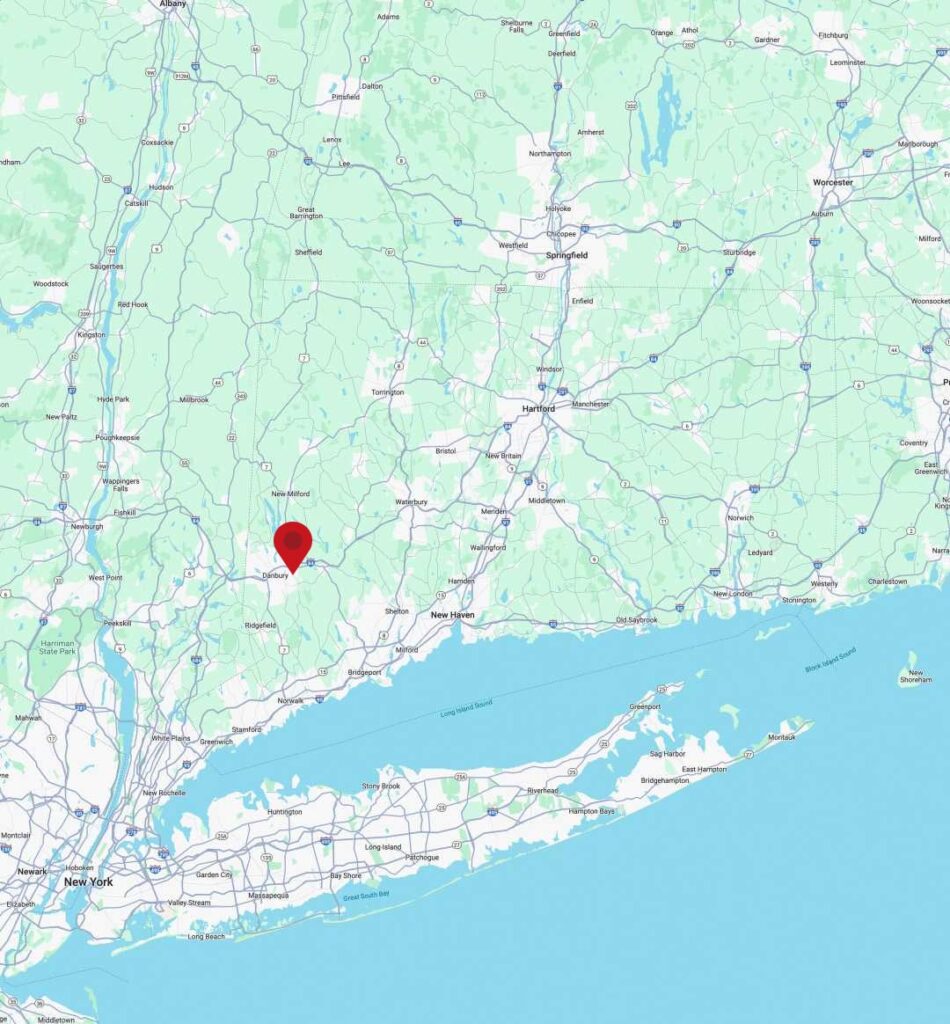
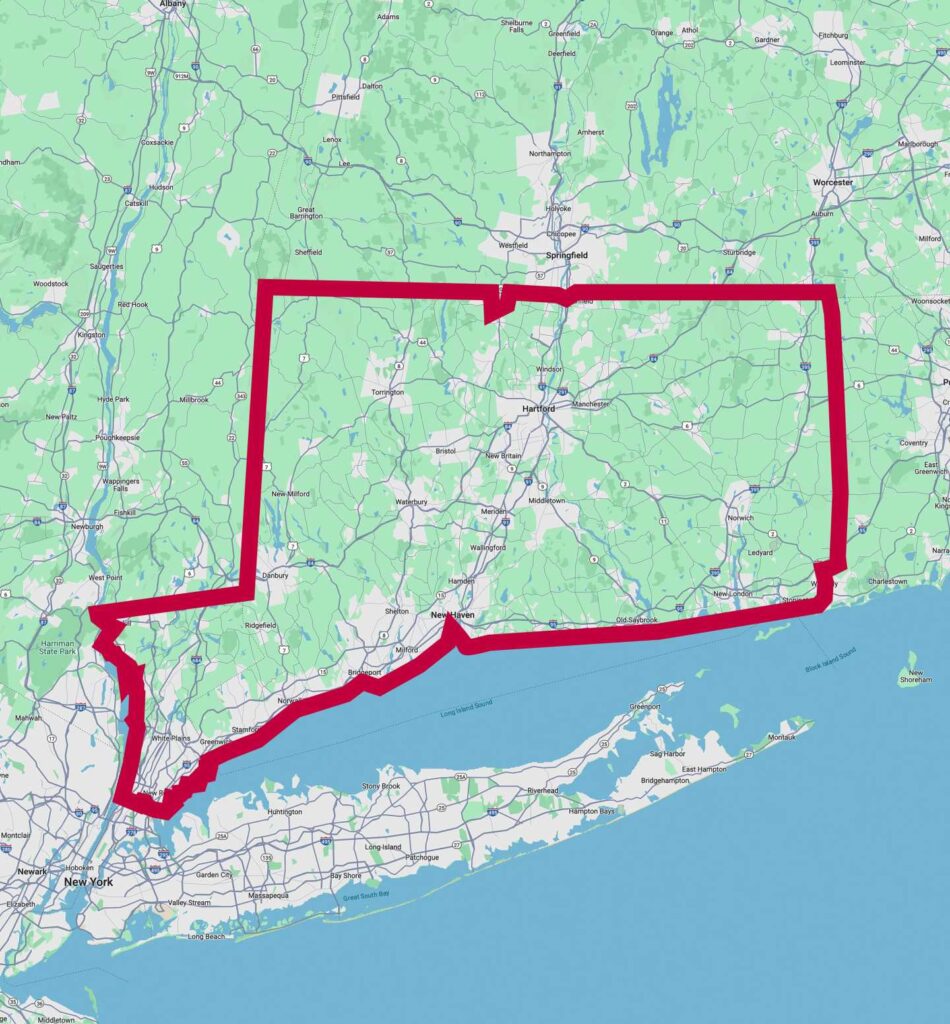
Berkshire Food has been family-owned and operated since 1964, serving workplaces across Connecticut and Upper Westchester County, New York. Its workplace refreshment solutions include coffee equipment, coffee products, supplies, delivery support, and other break room services.
For Connecticut businesses evaluating coffee service costs, the most practical approach is to start with employee usage, available space, preferred beverages, and the level of service support required.
Whether your business operates a small office, corporate workplace, healthcare facility, warehouse, or manufacturing location, a properly planned coffee program should reflect actual demand rather than a standard package chosen without reviewing your needs.
Ready to plan your workplace coffee budget? Contact Berkshire Food to discuss your employee count, coffee preferences, equipment requirements, and available office coffee service options. A proposal based on your workplace requirements can help you make a more informed financial decision.
Frequently Asked Questions
Monthly costs vary according to employee consumption, equipment, coffee selections, serving supplies, and service arrangements. A business should request a quote based on estimated monthly servings and the products and support included rather than rely on a generic price.
Not necessarily. Independent purchasing can work for smaller offices, while managed service may simplify ordering, equipment support, and replenishment. Compare total product costs, equipment expenses, maintenance responsibilities, and internal staff time before deciding.
Equipment arrangements differ by provider and agreement. A machine may be purchased, rented, leased, or included under particular service terms. Businesses should confirm the exact equipment costs, installation responsibilities, maintenance provisions, and any minimum purchase requirements.
Cost per cup depends on the coffee product, brewing format, serving size, and related supplies. Single-cup products, traditional brewed coffee, and specialty beverages may have different expenses. Waste and unused brewed coffee can also affect actual cost per consumed serving.
They may be included in the available product selection, but pricing and service terms should be confirmed with the provider. Businesses should request an itemized explanation of cups, lids, creamers, sweeteners, stirrers, and other supplies included in their proposed arrangement.
A small office can estimate actual coffee demand, choose equipment suited to its team, limit unpopular products, and track monthly supply usage. Reviewing employee attendance and consumption helps avoid unnecessary purchases while maintaining a convenient workplace coffee station.
Replenishment depends on employee count, beverage consumption, storage capacity, and the service arrangement. Busy offices and multi-shift facilities may need a different schedule from small professional workplaces. Actual consumption should guide adjustments after the program begins.
Berkshire Food offers workplace coffee solutions for Connecticut businesses, including coffee equipment, products, supplies, and service support. Businesses can contact the company to discuss their workplace requirements and confirm the available equipment, pricing, and service arrangements.