

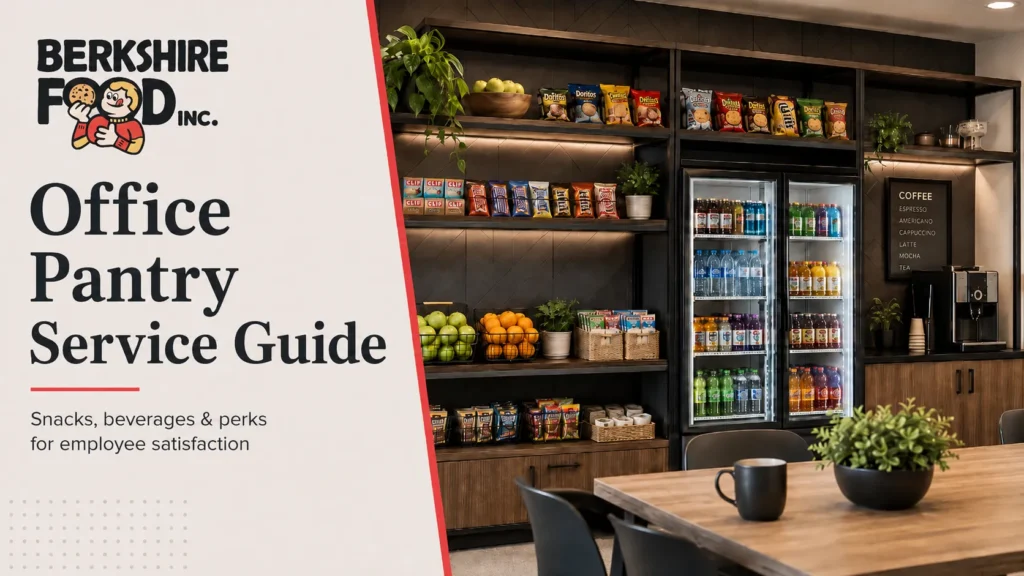
Employee expectations have changed. A workplace break room is no longer just a place to sit for a few minutes. For many teams, it is part of the daily work experience. Employees want convenient access to coffee, water, snacks, drinks, and simple food options without having to leave the office or depend on last-minute supply runs. That is why office pantry service has become an important workplace benefit.
An office pantry gives employees access to company-provided snacks, beverages, and break room essentials in an open, organized, and easy-to-use setup. Unlike vending machines, where employees purchase items individually, pantry service is usually offered as an employer-paid perk. It can support morale, convenience, culture, and employee appreciation in a practical way.
This guide explains how office pantry service works, what it can include, which workplaces benefit most, and how businesses can build a pantry program that employees actually use.
What Is Office Pantry Service?
Office pantry service is a managed workplace refreshment program where snacks, beverages, coffee supplies, and other break room essentials are stocked for employees to enjoy. Instead of asking office managers, HR teams, or facilities staff to shop for snacks, reorder supplies, and respond to empty shelves, a pantry service provider helps manage the program. The goal is to create a convenient, organized, and employee-friendly break room. For businesses that want a reliable pantry setup, Berkshire Food’s office pantry service can support snacks, beverages, supplies, and local service for Connecticut workplaces.
How an office pantry works
An office pantry usually works through a simple process. The provider reviews the workplace, recommends product options, helps plan the pantry layout, and stocks the items employees need. Over time, the product mix can be adjusted based on what employees use most.
A pantry may include snacks, bottled or canned beverages, coffee supplies, tea, creamers, sweeteners, fruit, breakfast items, wellness-focused options, and basic break room supplies. The exact setup depends on company budget, employee preferences, available space, and how the break room is used during the day.
Why Office Pantry Service Matters for Employee Satisfaction
Employee satisfaction is influenced by many things, including compensation, leadership, flexibility, workload, and culture. But small daily experiences also matter. A stocked pantry is not a replacement for larger workplace improvements, but it can make the workday feel more convenient and thoughtful. Employees notice when the company provides useful everyday perks. A snack, cold drink, or coffee creamer may seem simple, but when these items are consistently available, they help the break room feel cared for. That consistency can support morale and make employees feel more comfortable at work.
A perk employees use often
Many workplace perks are used occasionally. A pantry is different because it’s something employees can benefit from every day. Someone may grab a granola bar before a meeting, a sparkling water in the afternoon, or a quick snack between tasks. These small moments add up.
A good pantry program supports employees without requiring them to leave the building for basic refreshments. It also helps create a workplace environment where people feel that their daily comfort is considered, not ignored.
A simple way to show appreciation
Office pantry service can also support employee appreciation. Companies do not always need large events or expensive perks to show they value their teams. Sometimes, a well-stocked break room can send a clear message that employees’ daily needs matter.
The key is consistency. A pantry that’s stocked once and then neglected can quickly become frustrating. A pantry that is managed properly becomes a reliable part of the employee experience.
What Can Be Included in an Office Pantry?
An office pantry can be as simple or as complete as the workplace needs it to be. Some companies start with snacks and beverages. Others include coffee supplies, breakfast items, healthier options, fruit, sparkling water, tea, and pantry essentials. The best pantry is not the one with the largest product list. It is the one that matches employee preferences and workplace habits. A corporate office may want premium snacks and beverages, while a warehouse or medical facility may need more filling options for longer shifts. Planning the product mix carefully helps the pantry feel useful instead of random.
Common pantry items
A typical office pantry may include packaged snacks, granola bars, chips, crackers, nuts, trail mix, cookies, fruit snacks, protein bars, bottled water, sparkling water, teas, juices, and other ready-to-use beverages. Some workplaces also add fresh fruit, oatmeal cups, breakfast bars, or simple grab-and-go items.
Coffee-related supplies are also common. These may include creamers, sweeteners, cups, stirrers, napkins, and other beverage station essentials. When pantry service is paired with office coffee service, the break room can feel more complete and easier to manage.
Balancing popular snacks and better-for-you options
A strong pantry should include variety. Employees may enjoy classic snacks, but many also appreciate better-for-you choices such as nuts, protein bars, trail mix, baked snacks, low-sugar drinks, and water.
The goal is not to remove familiar favorites. This helps to offer a balanced selection so employees with different preferences can find something useful. A pantry with only sweets may feel limited. A pantry with only health-focused items may not match how employees actually snack. Balance matters.
Office Pantry Service vs. Vending Machines
Office pantry service and vending machines both improve workplace refreshment access, but they work in different ways. Pantry service is usually employer-funded, meaning employees can access snacks and beverages as a company-provided perk. Vending machines are purchase-based, meaning employees buy items individually. Both options can be useful depending on the workplace. Pantry service is often a better fit for companies focused on employee appreciation, workplace culture, and retention. Vending may be better for workplaces that want snack and beverage access without covering the full product cost.
Simple comparison for employers
| Feature | Office Pantry Service | Office Vending Machines |
| Payment model | Usually employer-paid | Employee-paid purchases |
| Product access | Open pantry shelves or stations | Items dispensed from machines |
| Best for | Employee perks and workplace culture | Compact snack and drink access |
| Product control | Employer can guide selections | Provider stocks based on usage |
| Employee experience | Feels like a workplace benefit | Feels like convenient purchasing |
For some workplaces, office vending machines may be the better fit because they offer reliable snacks and drinks without the employer paying for every item. For others, pantry service makes more sense because the company wants to provide refreshments as part of the employee experience.
Office Pantry Service vs. Micro Markets
Office pantry service and micro markets can both create a better break room, but they are designed for different goals. A pantry is usually a company-provided snack and beverage program. A micro market is more like a small self-service store inside the workplace, where employees can buy fresh food, drinks, snacks, and meals through a checkout kiosk. Pantry service works well when the company wants to offer free or employer-funded perks. Micro markets work well when employees need wider food choices, fresh meals, and a larger product selection.
When a micro market may be a better fit
A micro market may be a better fit for larger workplaces, high-traffic facilities, and companies where employees need lunch options or fresh food without leaving the building. It can include sandwiches, salads, wraps, fruit, refrigerated meals, snacks, and cold beverages.
For businesses that want fresh food and a broader self-service setup, office micro markets can offer more variety than a typical pantry. Pantry service is still a strong choice when the main goal is to provide snacks and drinks as a workplace perk.
How Office Pantry Service Supports Company Culture
Culture is built through many daily experiences, not just company meetings or annual events. The break room is one of those daily touchpoints. When employees walk into a pantry area that is clean, stocked, and easy to use, it can help the workplace feel more organized and employee-focused. A pantry also encourages people to take short breaks, connect informally, and feel supported during busy workdays. It is a simple benefit, but it can reinforce a company’s values when it is managed consistently and thoughtfully.
Creating a more welcoming break room
A pantry can make the break room feel more welcoming because employees do not have to bring every snack or drink from home. They can rely on the workplace for small daily needs.
This is especially helpful in offices where employees spend long hours on-site, companies with meetings throughout the day, and workplaces where outside food options are limited. A stocked pantry can make the space feel less like an afterthought and more like a real part of the employee experience.
Supporting recruitment and retention
Office pantry service can also support hiring and retention efforts. It may not be the main reason someone joins or stays with a company, but it contributes to the overall workplace package.
Candidates and employees often notice details. A clean break room, quality coffee, snacks, and beverages can make the workplace feel more professional and employee-friendly. These details help shape how people experience the company day to day.
Pantry Service for Different Workplace Types
Different workplaces need different pantry programs. A small office may need a simple snack shelf and coffee supplies. A corporate office may want premium snacks, beverages, and wellness-focused options. A medical facility may need quick items for staff working long shifts. A school may need pantry support in staff areas. A warehouse or manufacturing workplace may need more filling snack options and drinks for active teams. The best pantry service should be flexible enough to fit the setting instead of assuming every workplace has the same needs.
Corporate offices
Corporate offices often use pantry service as part of the employee experience. Snacks, beverages, coffee supplies, and pantry essentials can support meetings, long workdays, client visits, and team collaboration.
In this setting, product presentation matters. A clean and organized pantry can make the break room feel polished and professional.
Medical facilities and schools
Medical facilities and schools often have busy staff schedules. Employees may not always have time to leave the building for snacks or drinks. A pantry can provide quick access to useful items during breaks.
For these workplaces, reliable stocking and practical product choices matter. Employees need items that are easy to grab, easy to eat, and appropriate for the work environment.
Warehouses and manufacturing facilities
In warehouses and manufacturing plants, employees may work physically demanding jobs and have limited break windows. Pantry service can provide quick access to snacks, beverages, and basic refreshment items.
These workplaces may need more filling options, hydration-focused beverages, and products that support active teams during long shifts. Placement also matters because the pantry should be accessible without disrupting operations.
How to Plan an Office Pantry Program
Planning an office pantry program starts with understanding how employees use the workplace. A pantry shouldn’t be built solely around what leadership prefers or what is easiest to order. It should reflect employee count, schedules, dietary preferences, storage space, budget, and service expectations. A well-managed pantry program should be easy for employees to use and easy for the workplace to maintain. When items run low, the area becomes cluttered, or service feels inconsistent, the pantry can become a source of frustration rather than a helpful workplace benefit. Planning ahead helps avoid those issues and makes the program easier to manage over time.
Start with employee needs
Before choosing products, consider what employees actually want and when they are likely to use the pantry. Some teams may want breakfast items. Others may prefer afternoon snacks, cold beverages, or healthier options.
A short employee survey can be useful, but informal feedback can also help. Product usage over time will usually show what people value most.
Set a realistic budget
Office pantry service is usually employer-funded, so budget matters. The purpose is to create a program that feels valuable without becoming difficult to sustain.
A company can start with core snacks and beverages, then expand later if usage and budget allow. It is better to have a smaller pantry that is consistently stocked than a large pantry that becomes unreliable.
Choose the right location
The pantry should be easy for employees to access. A hidden pantry in a low-traffic area may not be used much, while a well-placed pantry near the break room, kitchen, or employee lounge can become part of the daily routine.
The space should also support organization. Shelves, bins, beverage storage, coffee supplies, and waste areas should be arranged clearly so employees can use the pantry without creating clutter.
Managing Pantry Stocking and Product Rotation
A pantry program depends on good stocking habits. Employees quickly notice when popular items disappear, when products sit too long, or when supplies are not replaced. A managed service helps reduce those problems by keeping the pantry organized and adjusting products based on usage. Stocking should not be treated as a one-time task. It should be an ongoing process that reflects what employees actually use. Over time, the product mix should become smarter, more efficient, and better matched to the workplace.
Why product rotation matters
Product rotation keeps the pantry fresh and useful. Some items may start out popular before demand tapers off. A provider should review usage patterns and adjust selections when needed.
Rotation also prevents the pantry from feeling stale. Adding new snacks or seasonal options occasionally can keep employees interested without overcomplicating the program.
Avoiding waste and overstocking
A pantry can create waste if products are not managed carefully. Overstocking items that employees do not want can lead to clutter and unnecessary cost.
A better approach is to start with a thoughtful selection, monitor usage, and adjust gradually. This helps the company control costs while still offering a pantry employees appreciate.
Pantry Service, Hydration, and Workplace Wellness
Office pantry service can support workplace wellness when it includes balanced snack and beverage options. That does not mean every item must be strictly health-focused. It means employees should have access to choices that support different preferences. Water, sparkling water, lower-sugar beverages, nuts, protein bars, trail mix, fruit, and lighter snacks can all contribute to a more balanced break room. Hydration is especially important because employees use water throughout the day, not just during meals or breaks.
A pantry program can work well alongside office water service when a company wants to improve both snack access and daily hydration. This pairing is useful for offices, warehouses, medical facilities, schools, and manufacturing workplaces where employees need convenient beverage options throughout the day.
Wellness-focused pantry planning should be practical. Employees still appreciate familiar snacks, but offering better choices makes the pantry more inclusive and useful.
Common Office Pantry Mistakes to Avoid
Office pantry service works best when it is planned and managed carefully. Some companies launch a pantry with good intentions but run into problems because there is no clear stocking plan, no product review, no budget control, or no attention to employee preferences. These issues can make the pantry feel inconsistent. A pantry should not become another task that internal staff have to chase every week. It should make the workplace easier, not harder. Avoiding common mistakes helps the program stay useful and sustainable.
Stocking products employees do not use
One common mistake is choosing products without considering employee preferences. A pantry filled with items no one wants will not create satisfaction.
Product usage should guide future decisions. If certain snacks run out quickly, they may need to be stocked more often. If other items sit untouched, they may need to be replaced.
Letting the pantry become messy
A pantry should feel organized. When shelves are cluttered, supplies are scattered, or empty boxes remain in the break room, the experience becomes less appealing.
Good organization includes clear product placement, clean shelves, accessible supplies, and a plan for waste or recycling where appropriate.
Expanding too quickly
Some companies try to offer too many items at once. This can increase cost and make the pantry harder to manage.
A phased approach is often better. Start with a strong core selection, learn what employees use, and expand based on demand.
How to Measure Pantry Program Success
A successful pantry program should be measured by usage, employee feedback, service consistency, and cost control. The pantry does not need complicated reporting to be effective, but employers should pay attention to how the program performs. Are employees using it regularly? Are popular items stocked consistently? Are employees giving positive feedback? Are fewer issues being reported? Is the break room easier for internal teams to manage? These signs can show whether the pantry is helping. If the pantry is rarely used or constantly empty, the program may need adjustment.
Signs the pantry is working
A pantry program is usually working when employees use it often, product waste stays low, popular items are restocked, and the break room feels organized. It is also a good sign when employees mention the pantry positively or treat it as part of their daily routine.
The provider should also be able to help adjust the program. A pantry should improve over time, not stay fixed even when an employee needs change.
Why Choose Berkshire Food for Office Pantry Service?
Choosing a pantry provider is about more than picking snacks. A good provider should understand workplace refreshment needs, local service expectations, product selection, stocking, and break room planning. Berkshire Food is a family-owned and operated refreshment service provider serving Connecticut and Upper Westchester County, NY. Since 1964, the company has helped local workplaces build better break rooms through pantry service, coffee service, water service, vending, and micro markets. That experience is useful because each workplace needs a different refreshment setup.
Local pantry support for Connecticut workplaces
Berkshire Food can help businesses plan pantry programs around employee count, budget, workplace type, available space, and product preferences. Whether a company wants a simple snack station or a more complete pantry experience, the purpose is to make the break room easier to use and easier to manage.
Local service also matters because pantry needs change. Products run out, preferences shift, and workplaces grow. A provider with local support can help keep the program consistent over time.
Final Thoughts: Is Office Pantry Service Worth It?
Office pantry service can be a valuable investment for companies that want to improve employee satisfaction, convenience, and workplace culture. It gives employees access to snacks, beverages, and break room essentials without requiring them to leave the workplace or manage everything themselves. The best pantry programs are planned around real employee needs, stocked consistently, and adjusted over time. They do not need to be complicated to be effective. A reliable pantry can make the workday feel smoother and the break room feel more employee-focused.
Ready to build a better pantry program for your workplace? Contact Berkshire Food to start planning a break room solution that fits your team.